
Bree (YC S21)

Evolving a money app for 800k+ users

At Bree, a fast-growing fintech startup, I joined as the second product design hire, owning end-to-end mobile design. Bree builds a more responsible financial safety net with instant, interest-free access to funds, reducing reliance on predatory lending and supporting healthier financial habits. Working closely with founders, engineering, and data, I’ve shipped a wide range of features spanning growth, monetization, and core product experience, often moving from idea to live product in days or weeks. Selected impact: • Higher-tier limits flow → $1M+ projected added annual revenue • Cancellation redesign → 20% reduction in churn • Referrals redesign → 25% increase in shares • Lifecycle emails → +75% engagement through A/B testing • Led user research + data analysis to inform product decisions • Redesigned core experiences (10+ surfaces) • Drove design QA + conversion optimization across the app • Pushed design system updates and product features directly in codebase This page features a selection of projects I’ve worked on. Additional work will be shared as it becomes available.

Role

Product designer

Team

2 designers

Timeline

Sep '25 - Now

Core account experience

Settings, evolved

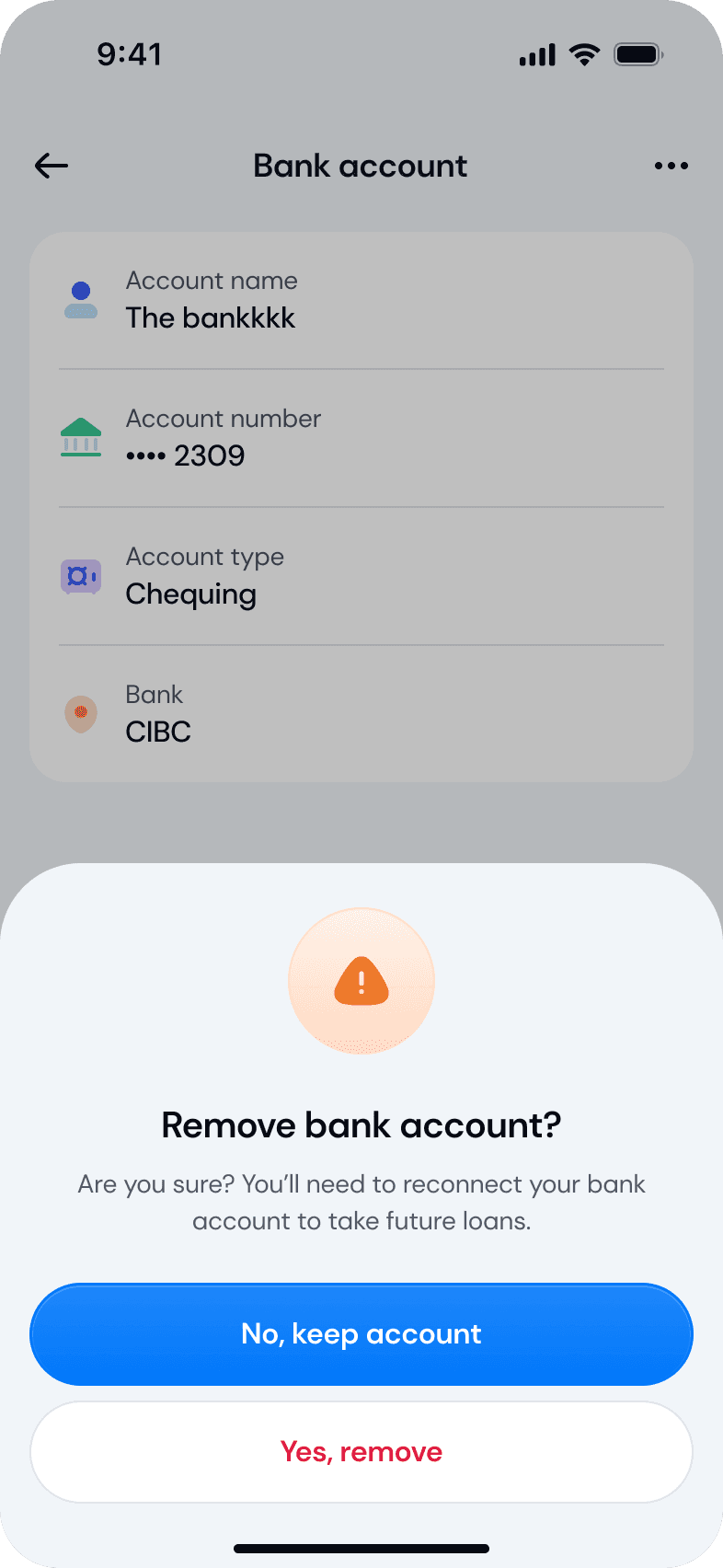
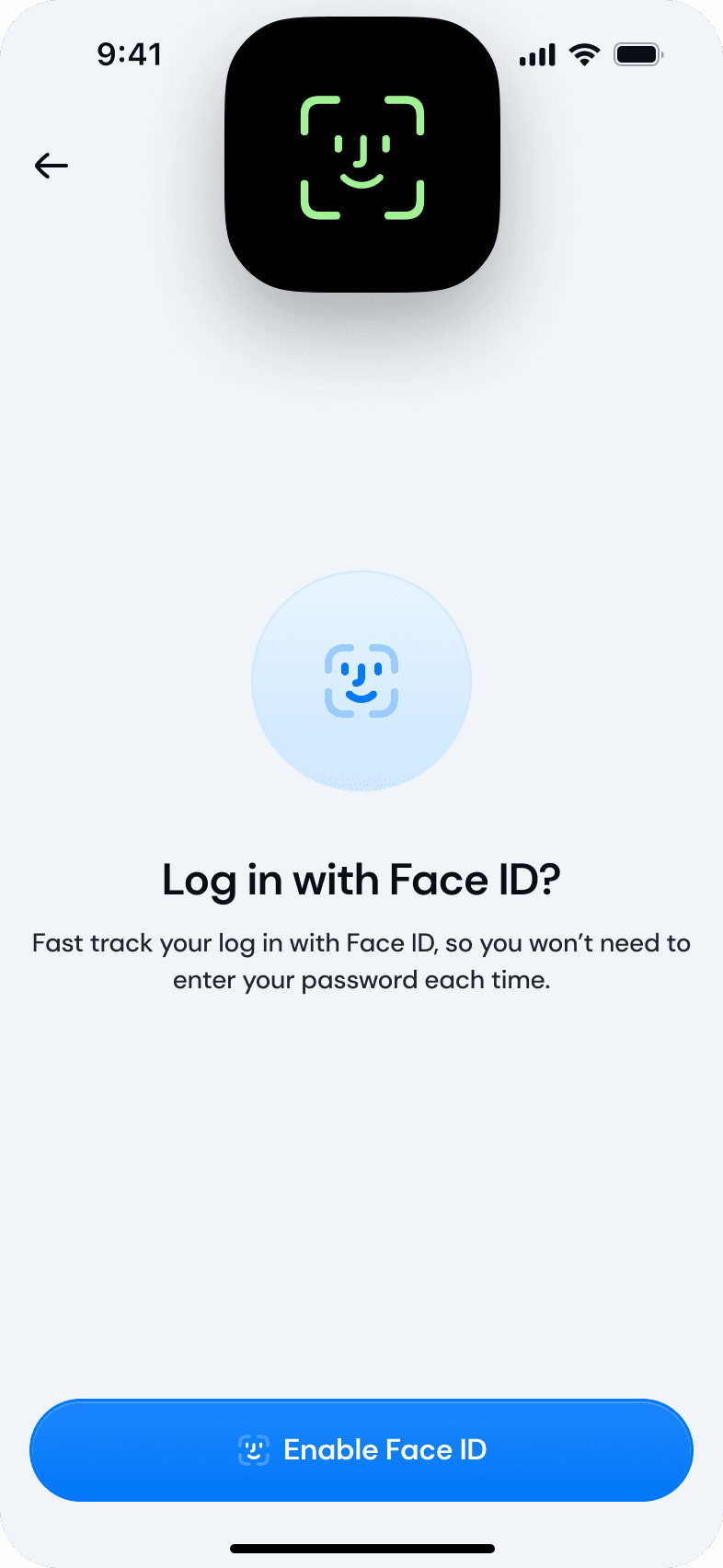
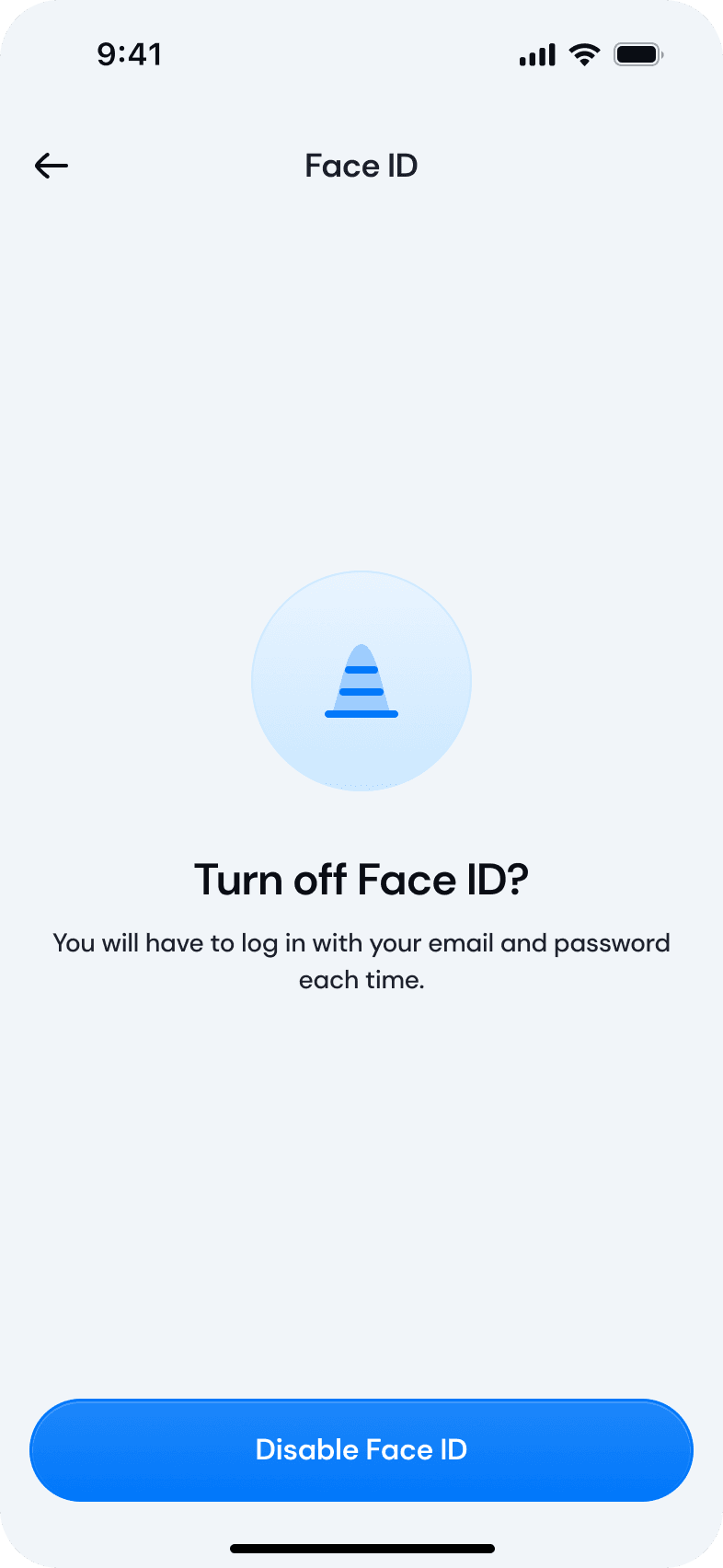
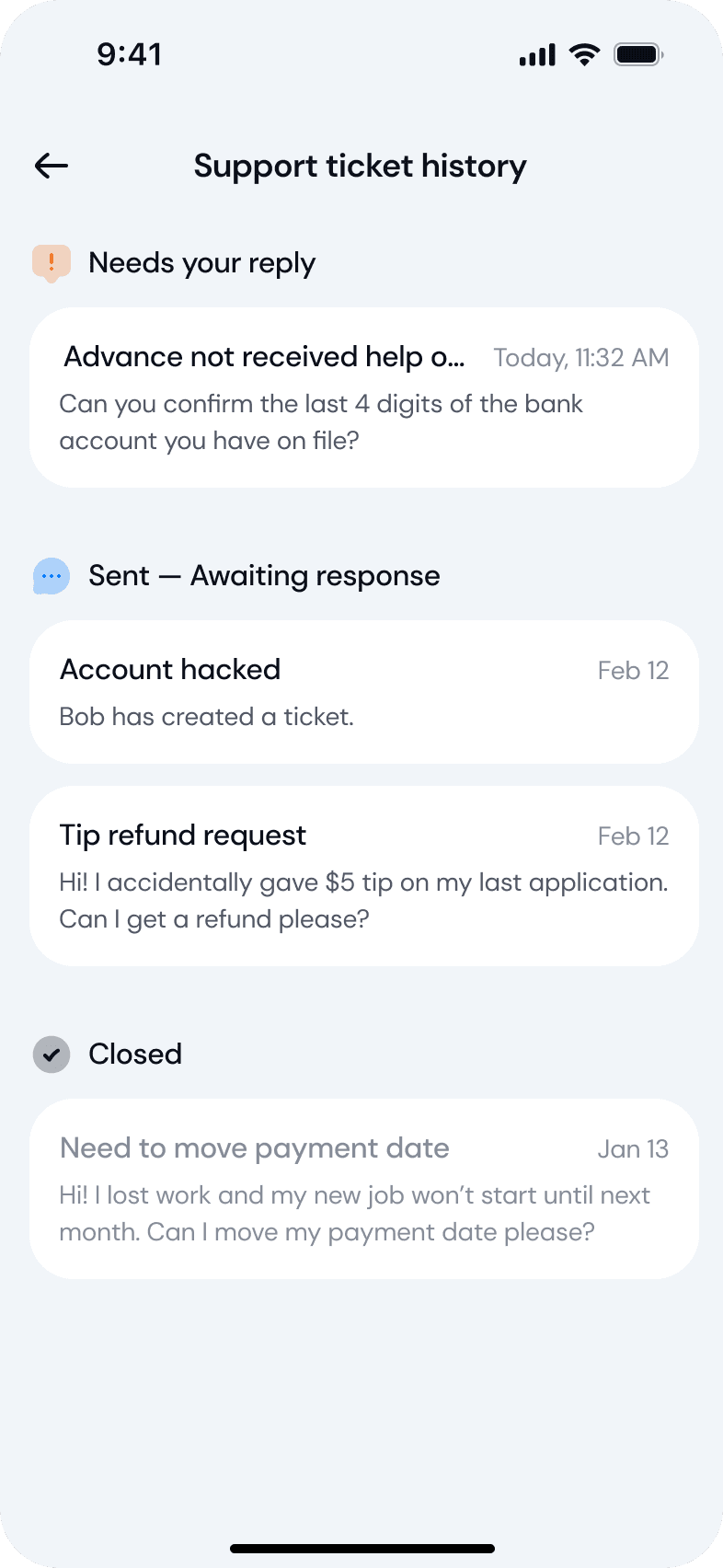
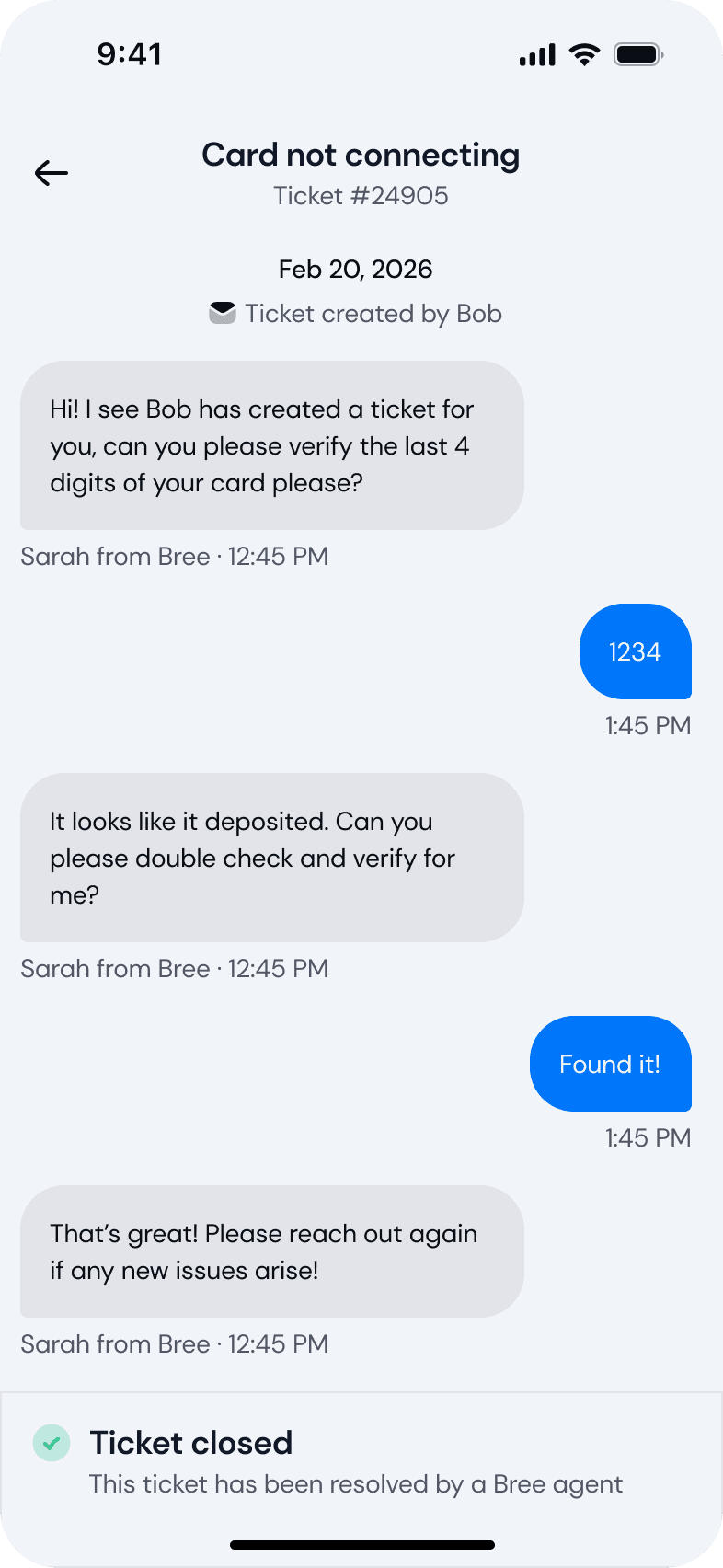
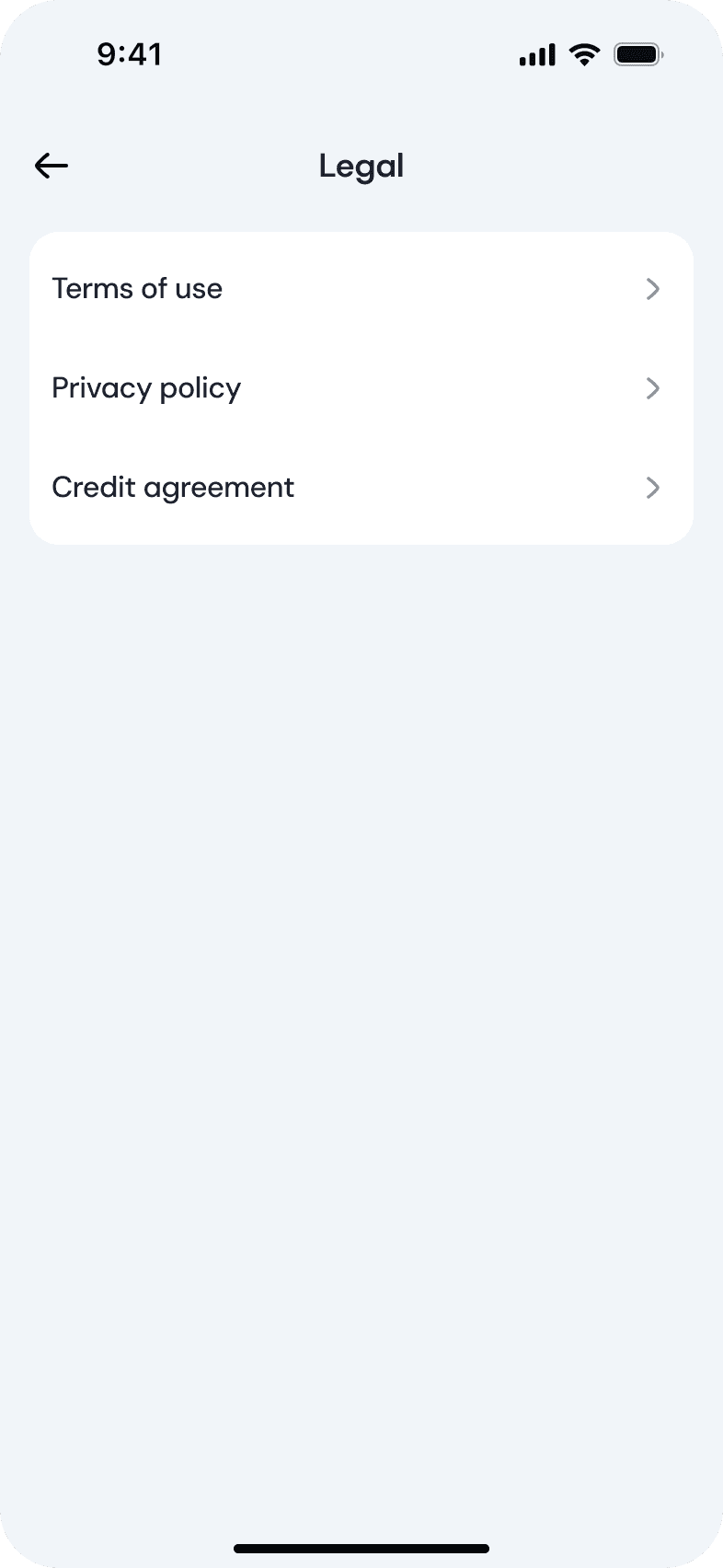
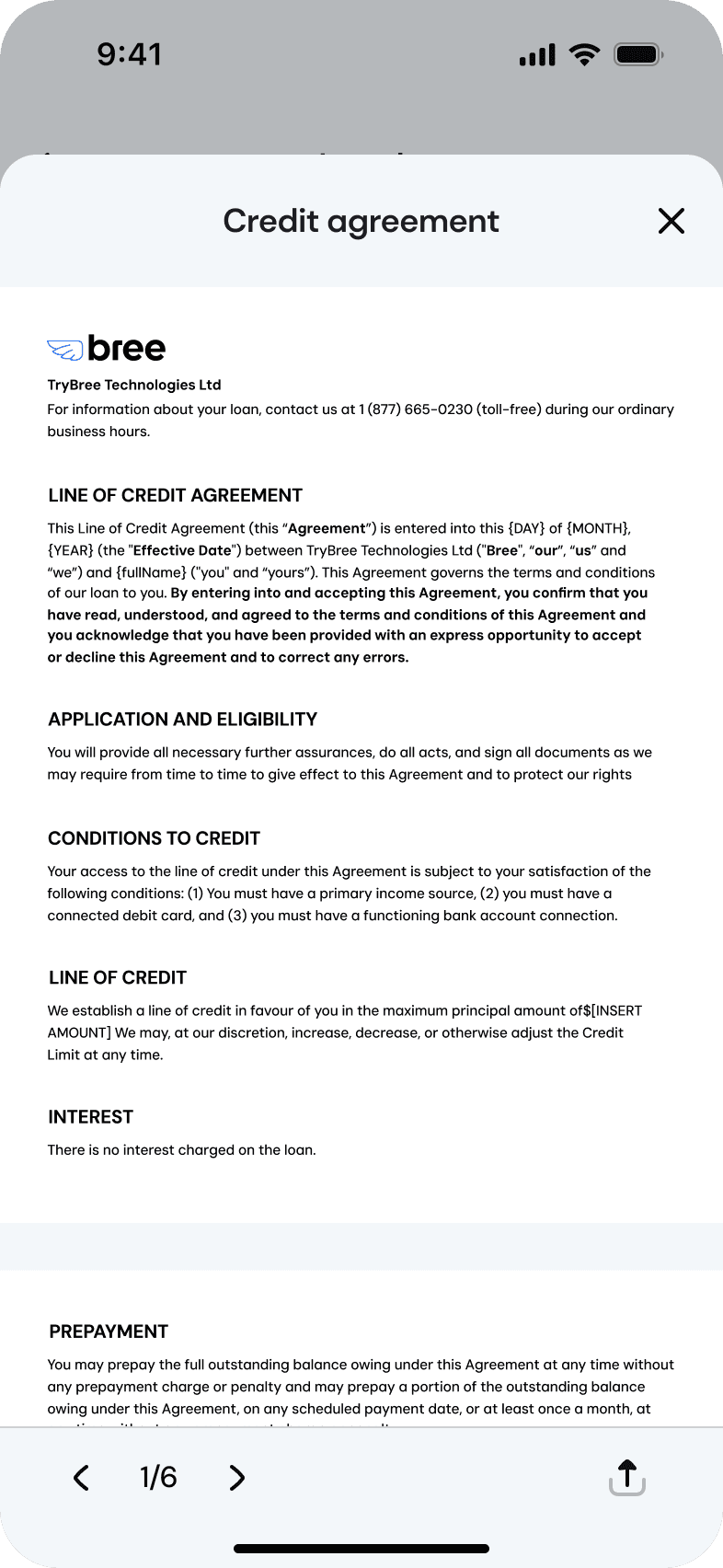
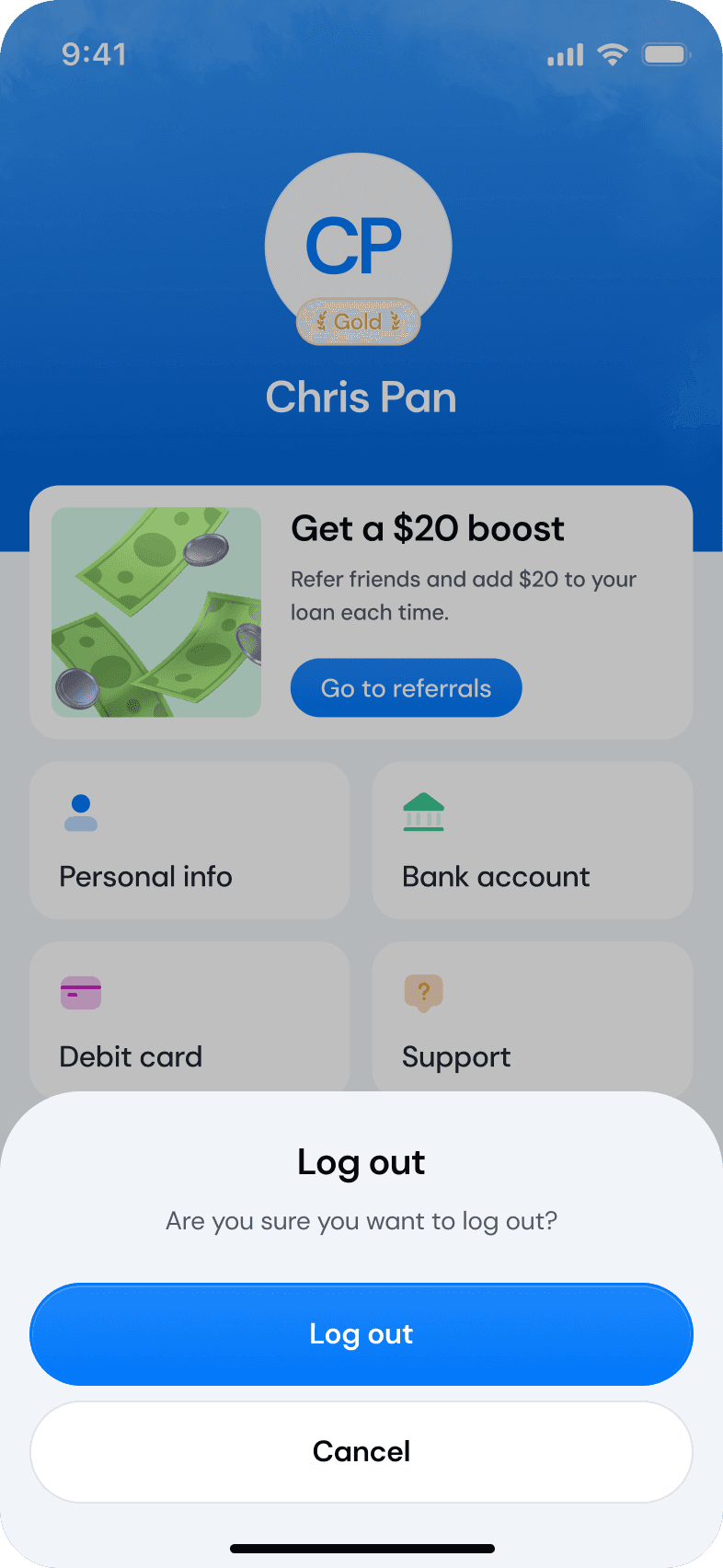
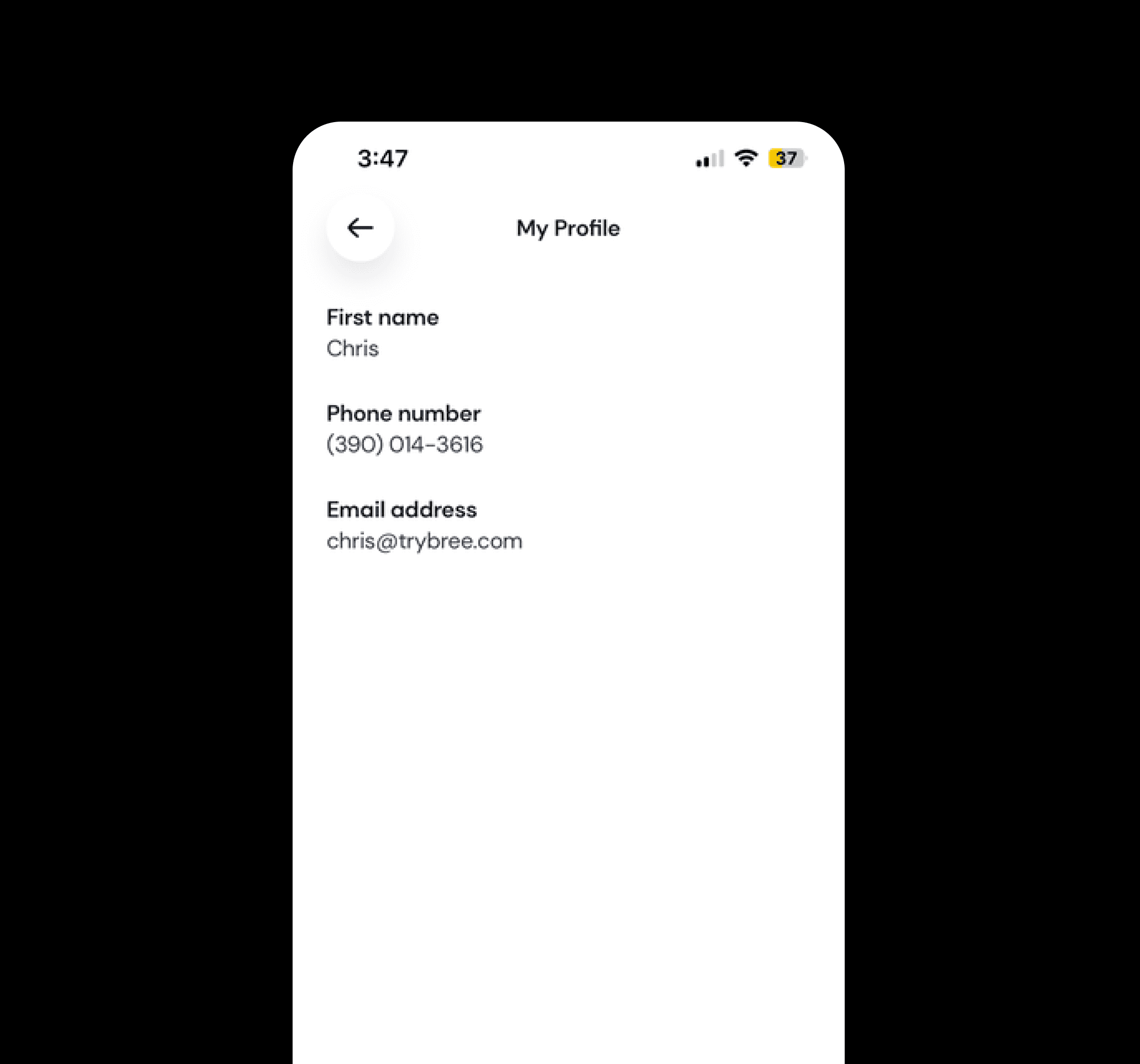
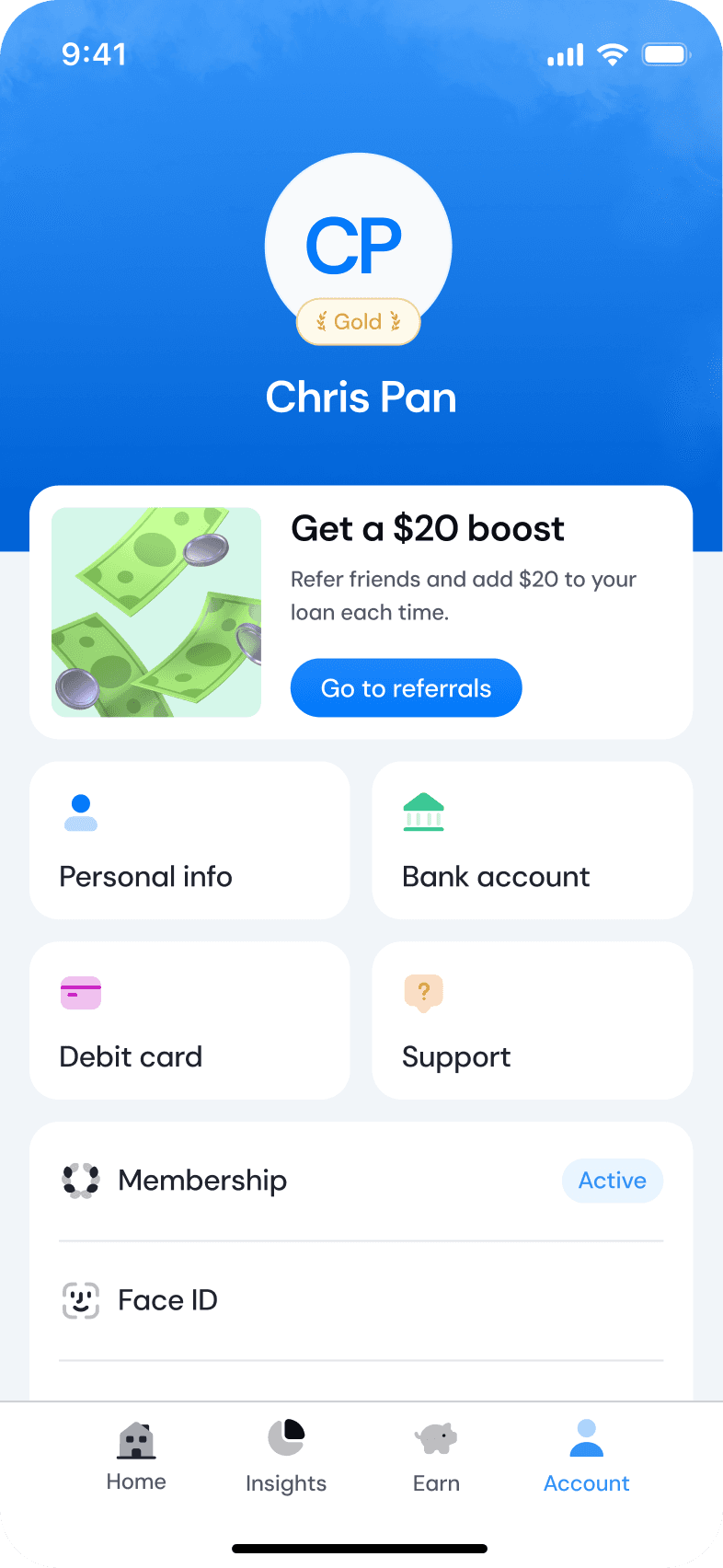
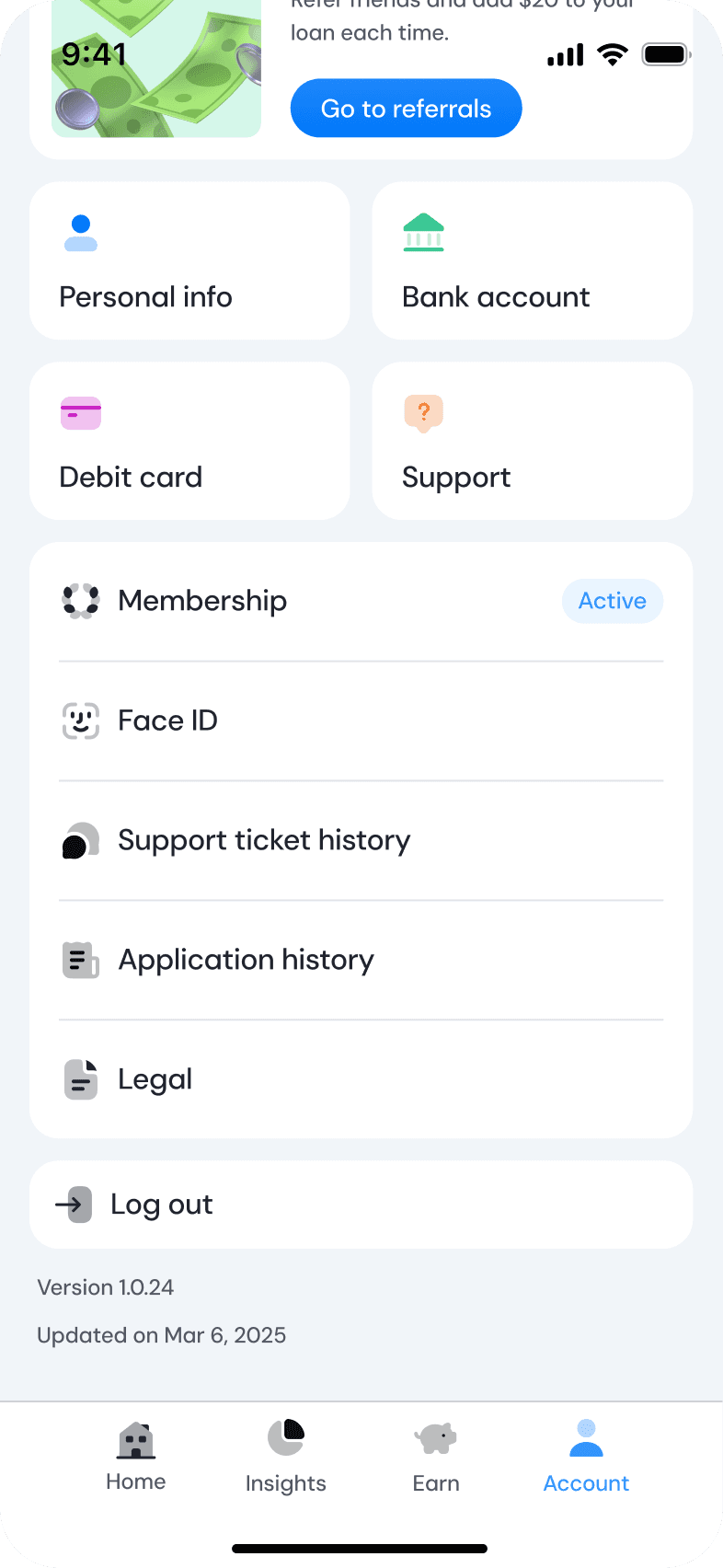
I redesigned and expanded Bree’s core account experience across settings, spanning payments, personal information, security, legal, and support, reworking existing subpages while introducing entirely new surfaces/features that did not previously exist.
Problem

Account/settings felt unreliable and difficult to navigate. Key information was buried or missing, interaction patterns varied across pages, and users lacked clear visibility and control over their account.

Solution

Redesigned 10 core account surfaces and introduced shared patterns across all flows, creating a more consistent and intuitive experience. Improved existing pages and introduced new surfaces to better support account management.

Problem

Account/settings felt unreliable and difficult to navigate. Key information was buried or missing, interaction patterns varied across pages, and users lacked clear visibility and control over their account.

Solution

Redesigned 10 core account surfaces and introduced shared patterns across all flows, creating a more consistent and intuitive experience. Improved existing pages and introduced new surfaces to better support account management.

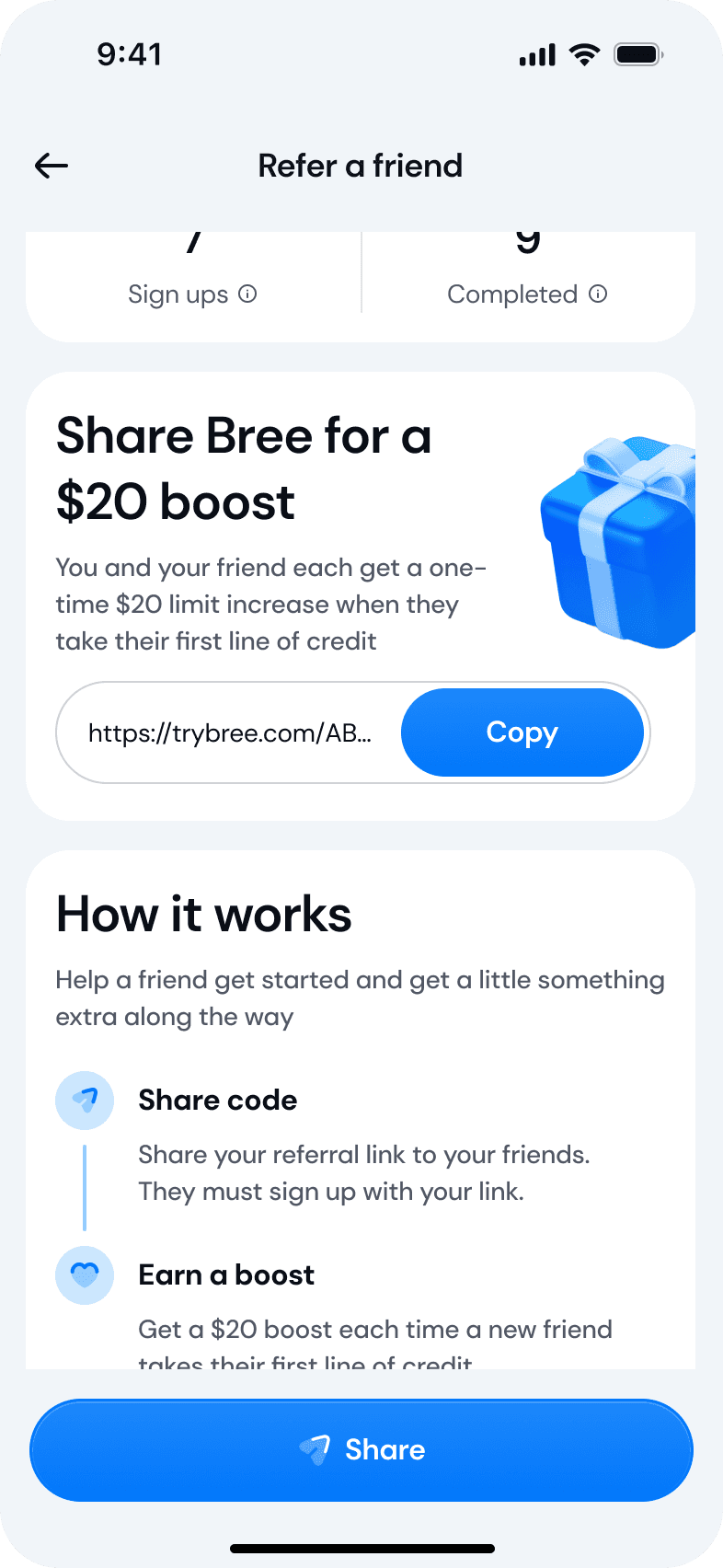
All account surfaces

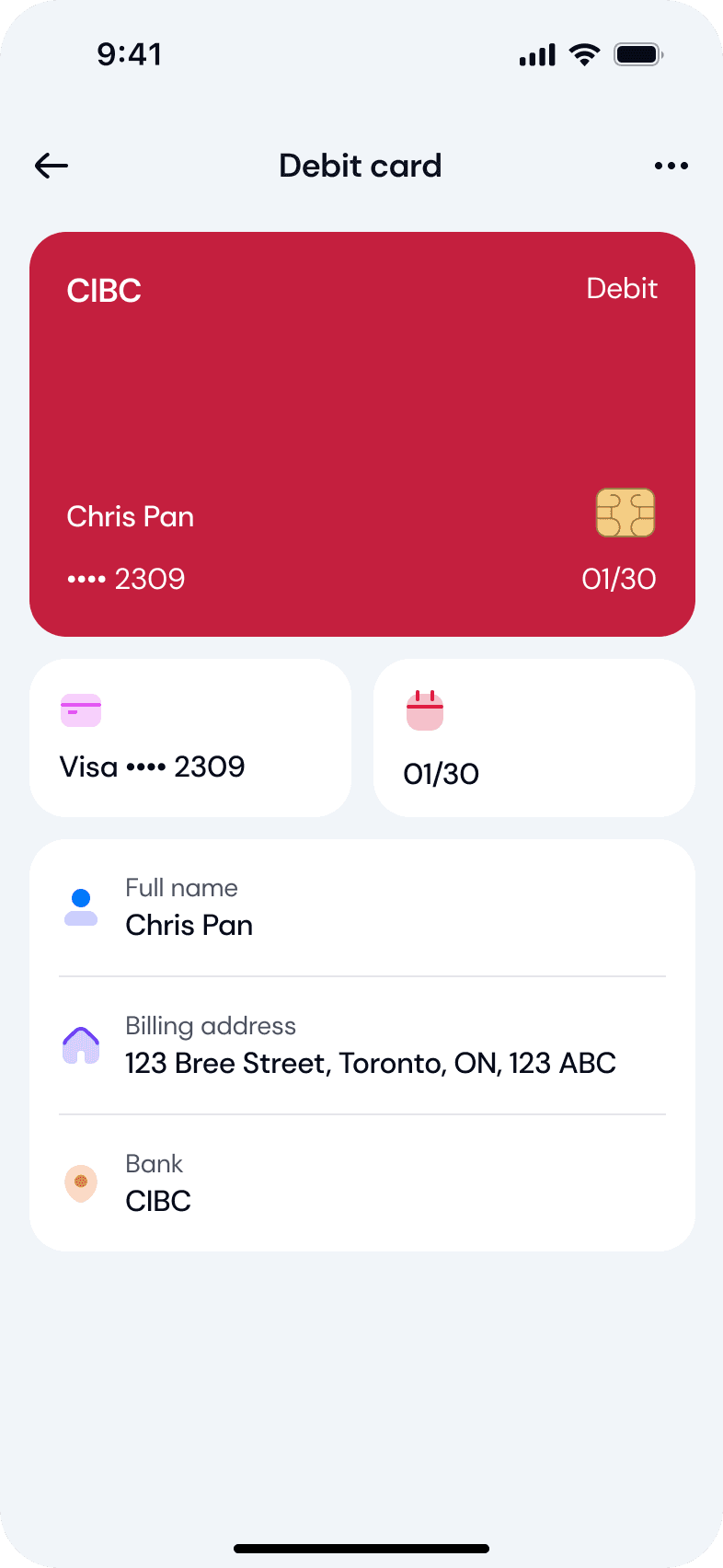
A unified system across 10 core account experiences, spanning payments, personal information, security, support, and more.

All account surfaces

A unified system across 10 core account experiences, spanning payments, personal information, security, support, and more.

System improvements

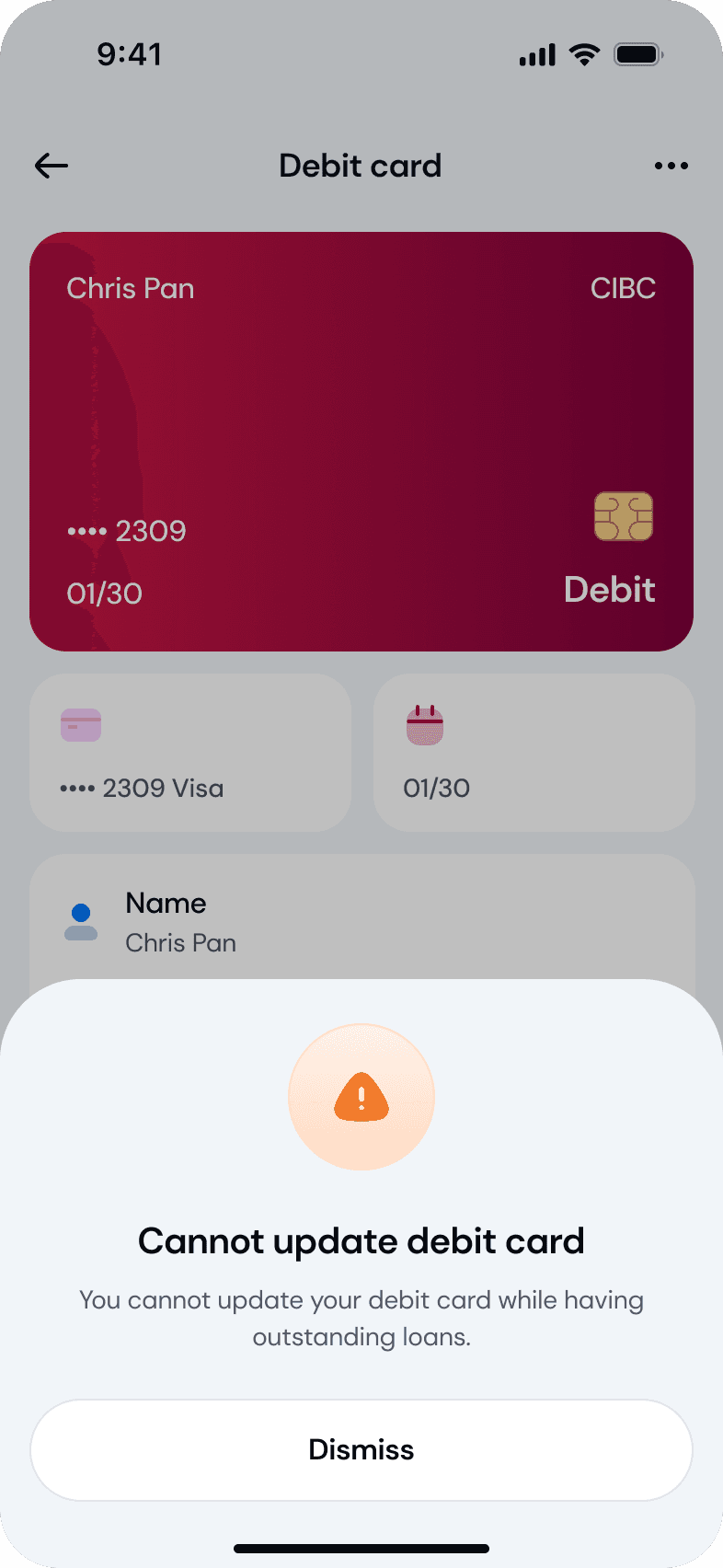
To unify the experience, I established shared patterns across all account surfaces, making interactions more predictable and information easier to understand.

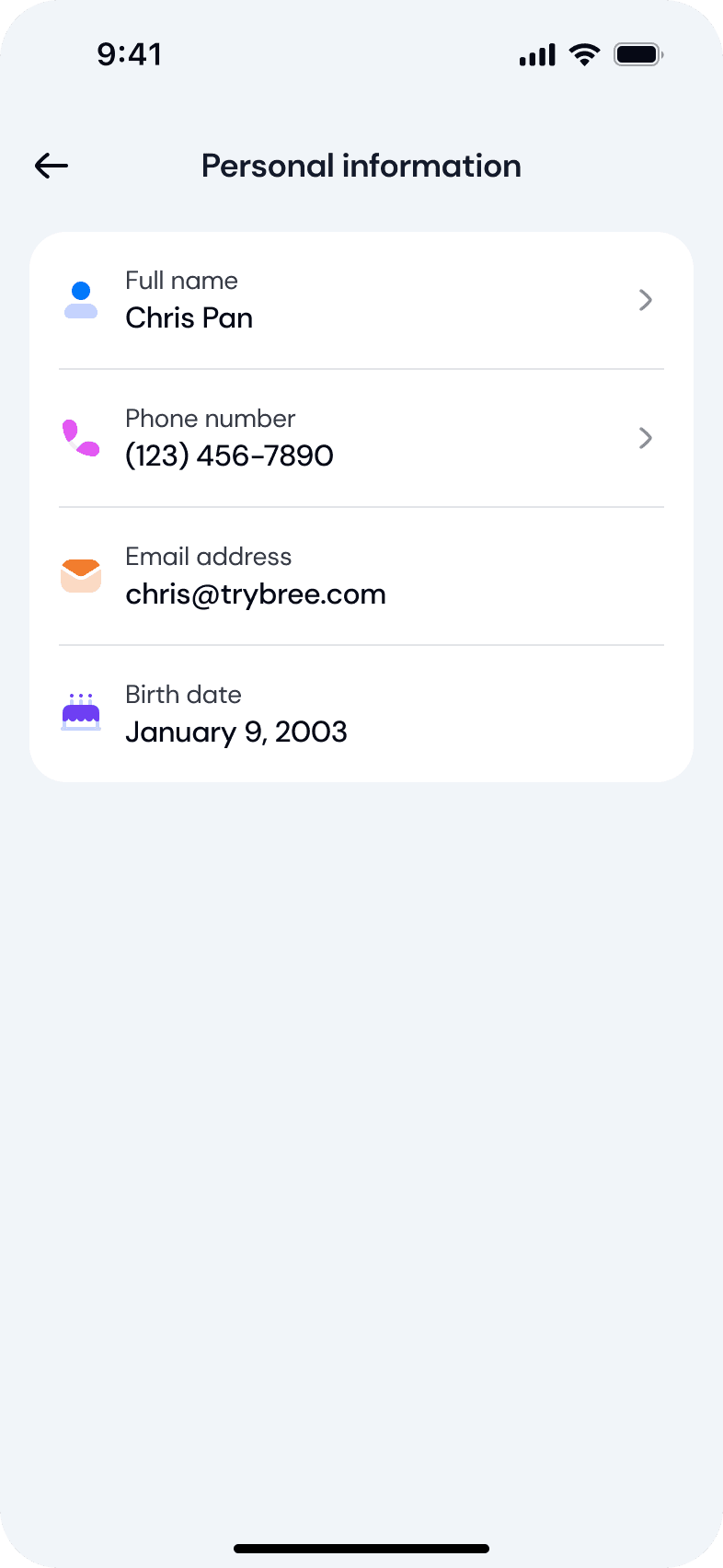
Consistent layout structure

Standardized layouts across all account surfaces to create a familiar and predictable structure, making navigation more intuitive.

More visual

Introduced icons, visual cues, and supporting elements to make content easier to process and more engaging at a glance.

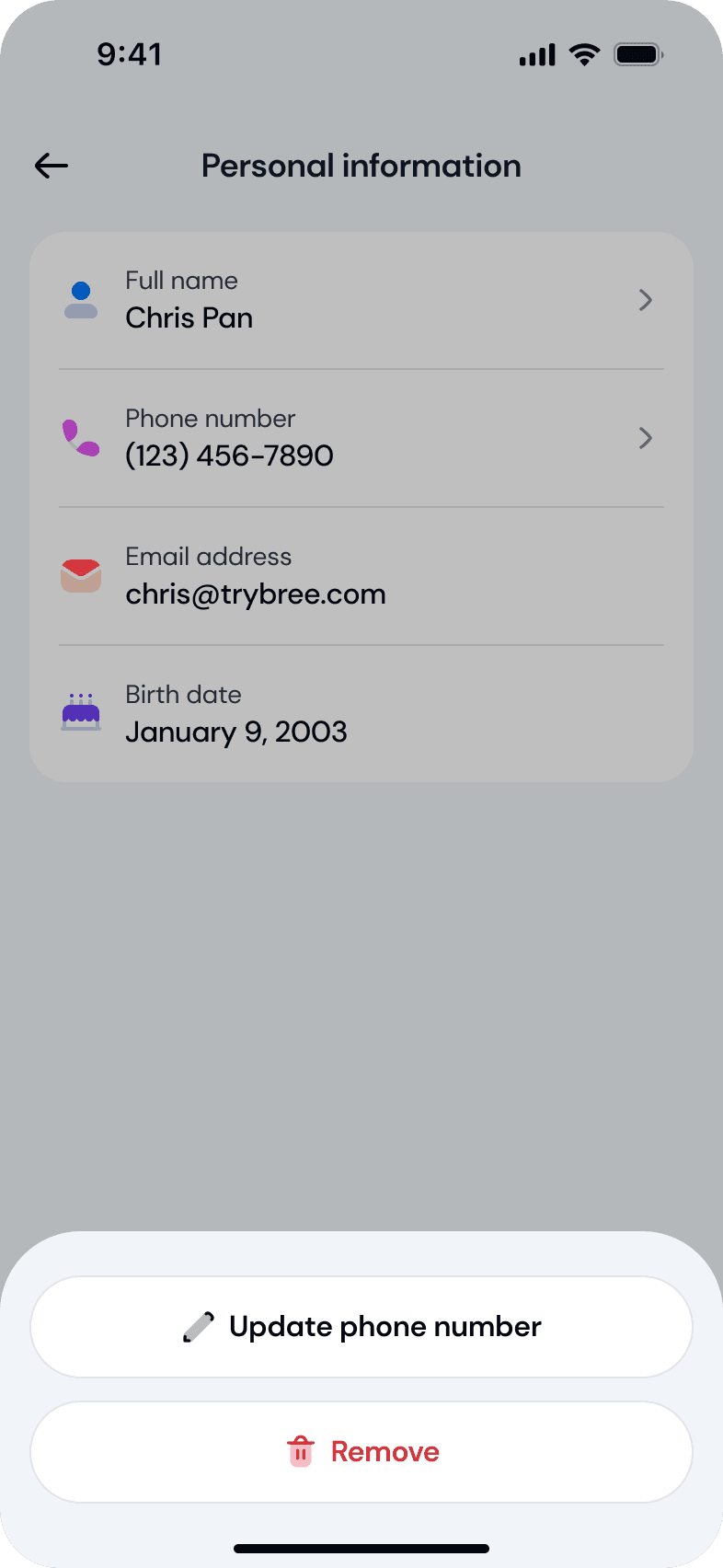
Expanded user control

Enabled key actions like updating, removing, and managing account details directly within each surface, giving users more control over their account.

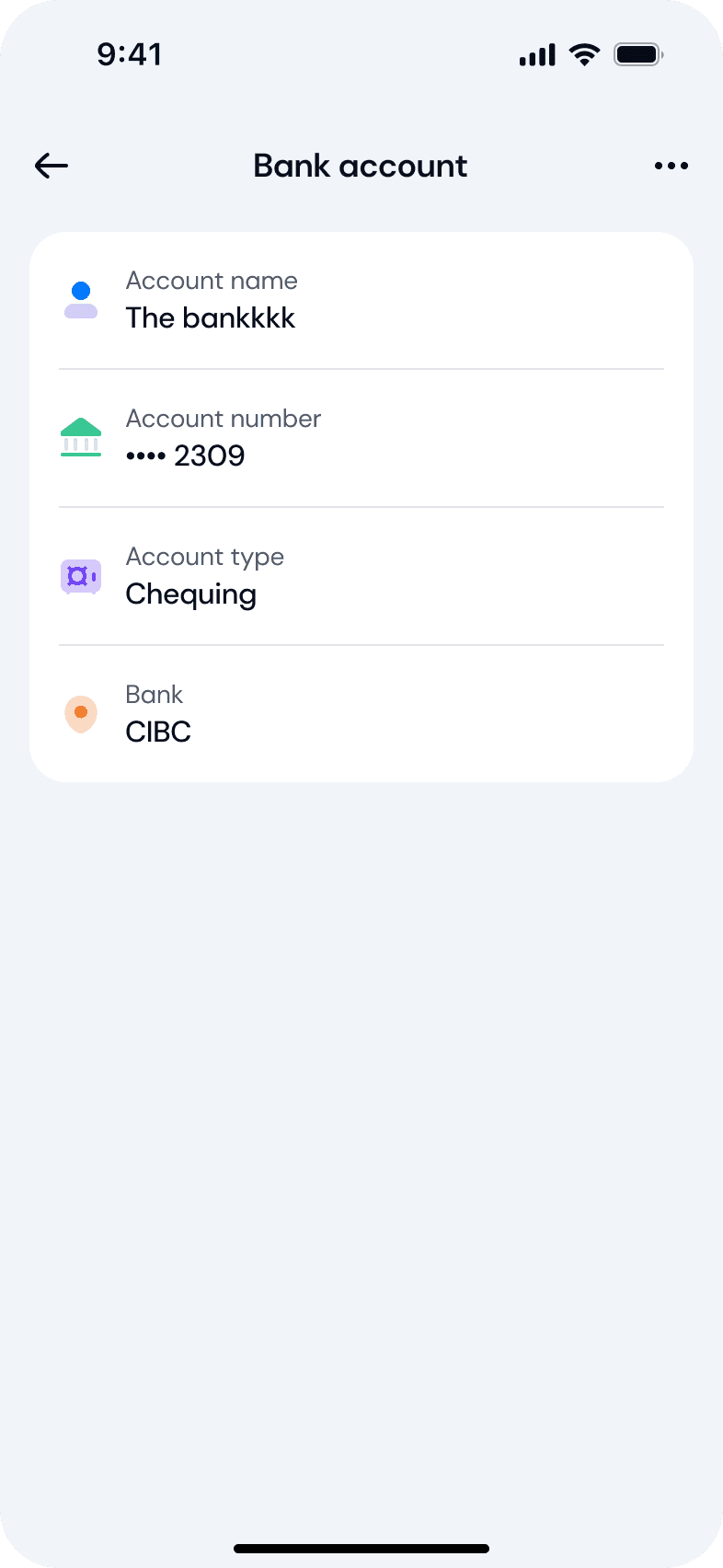
Richer account context

Surfaced additional details across pages, helping users better understand their account and make more informed decisions.

System improvements

To unify the experience, I established shared patterns across all account surfaces, making interactions more predictable and information easier to understand.

Consistent layout structure

Standardized layouts across all account surfaces to create a familiar and predictable structure, making navigation more intuitive.

More visual

Introduced icons, visual cues, and supporting elements to make content easier to process and more engaging at a glance.

Expanded user control

Enabled key actions like updating, removing, and managing account details directly within each surface, giving users more control over their account.

Richer account context

Surfaced additional details across pages, helping users better understand their account and make more informed decisions.

Before and after

To land on my final designs, I went through multiple iterations and ideas. Check out some before-and-after's of the old designs vs. new ones.

Before and after

To land on my final designs, I went through multiple iterations and ideas. Check out some before-and-after's of the old designs vs. new ones.

Before

Layouts varied in quality and clarity, with key actions often hidden or inaccessible, limiting how users could manage their account.
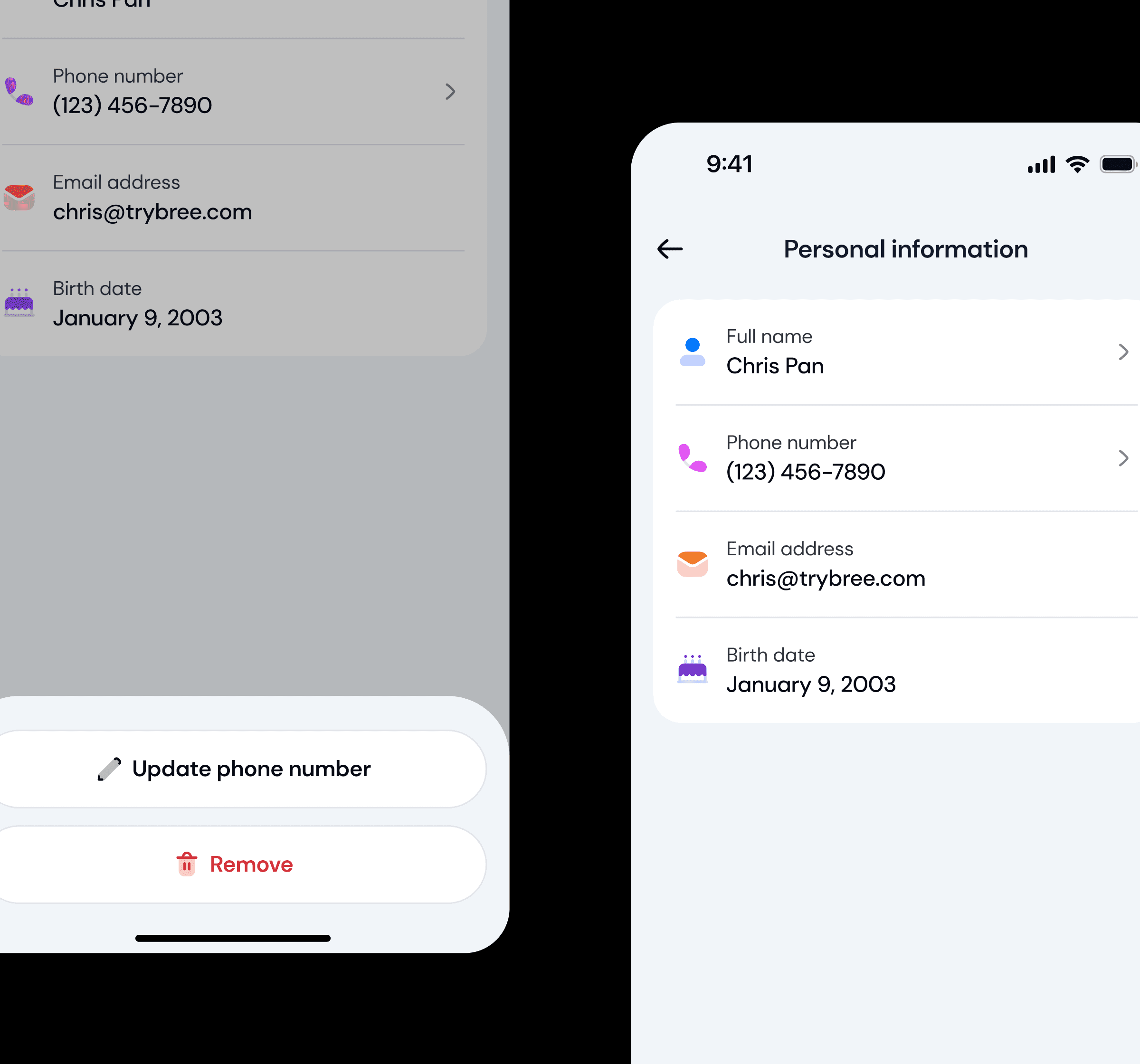
After

Established consistent, more refined layouts across all surfaces and surfaced key actions directly in the interface, giving users greater control over their account.
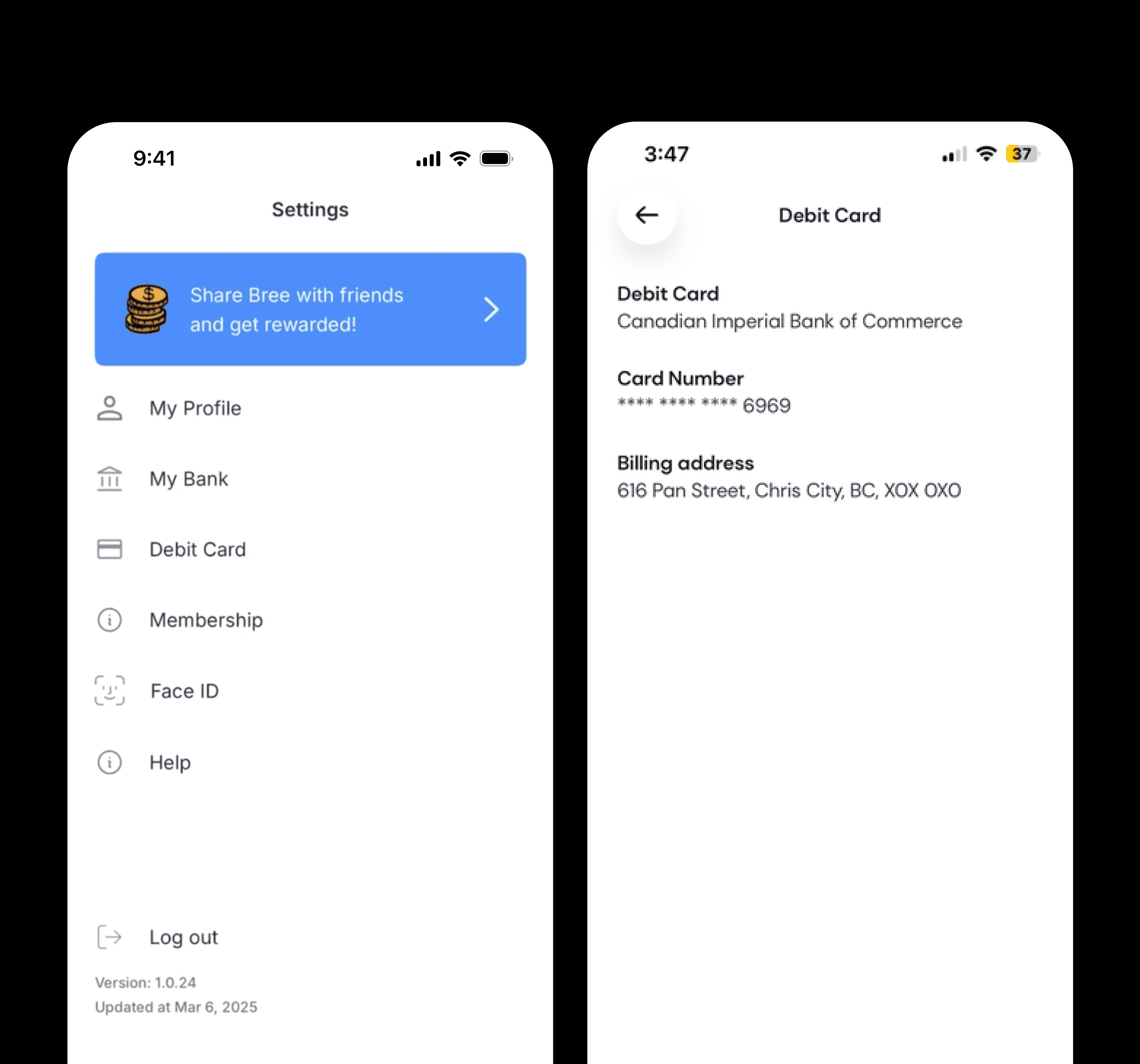
Before

Pages were text-heavy and lacked strong visual cues, making them harder to scan and less engaging to navigate.
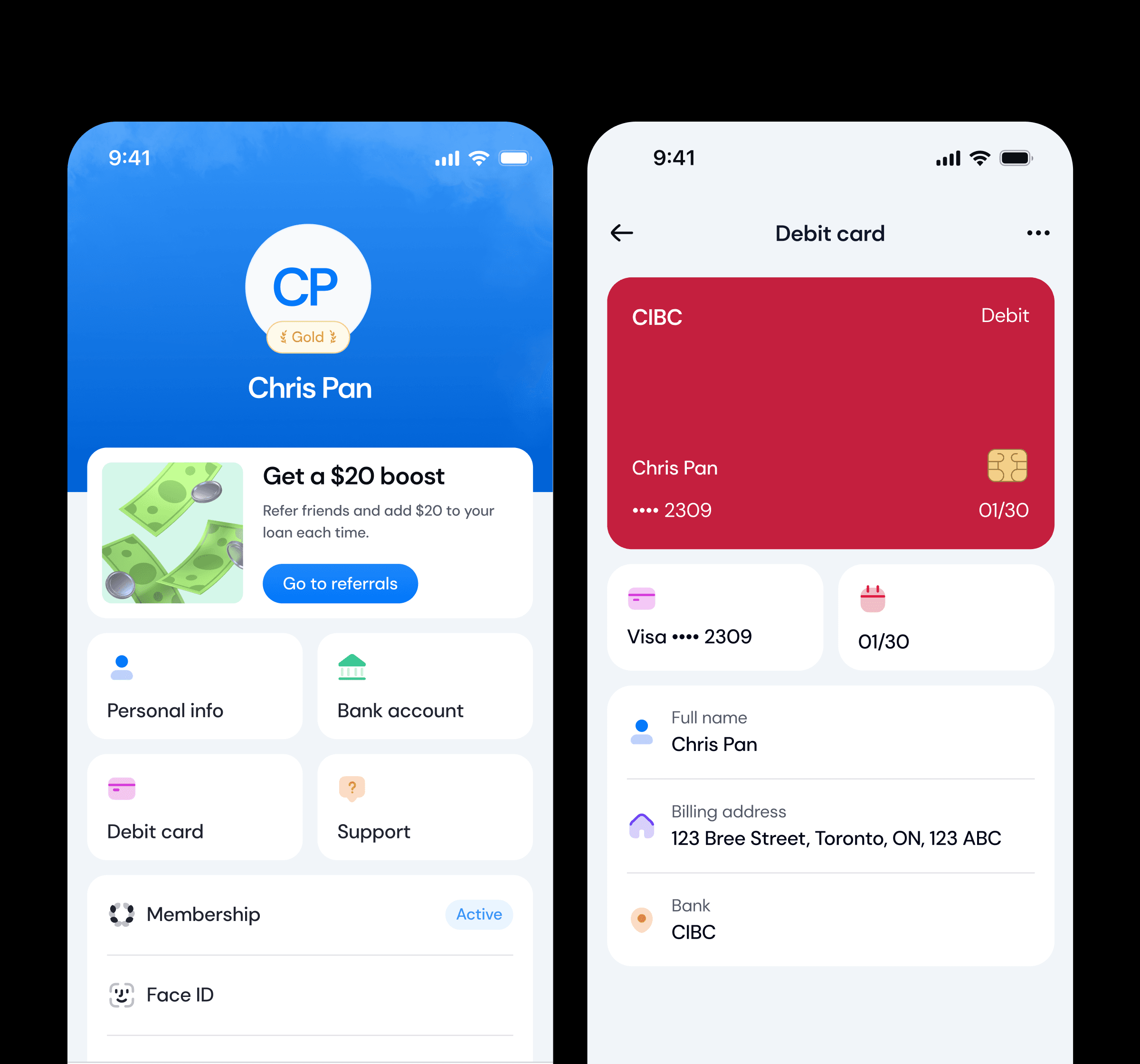
After

Introduced visual elements like coloured icons and supporting cues to improve scanability and create a more engaging browsing experience.
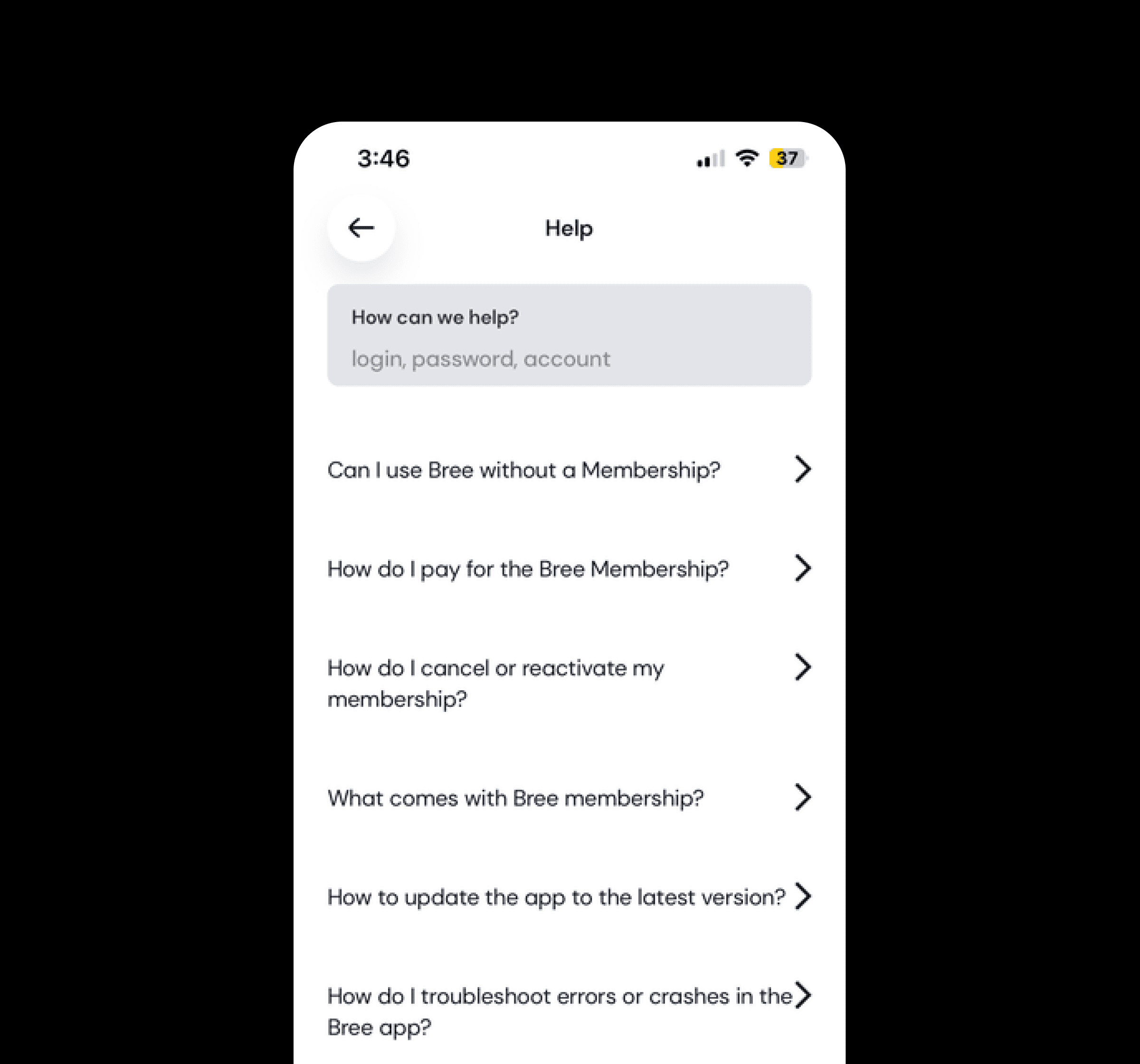
Before

Content across account surfaces was often unstructured or loosely organized, making it difficult for users to find relevant information quickly.
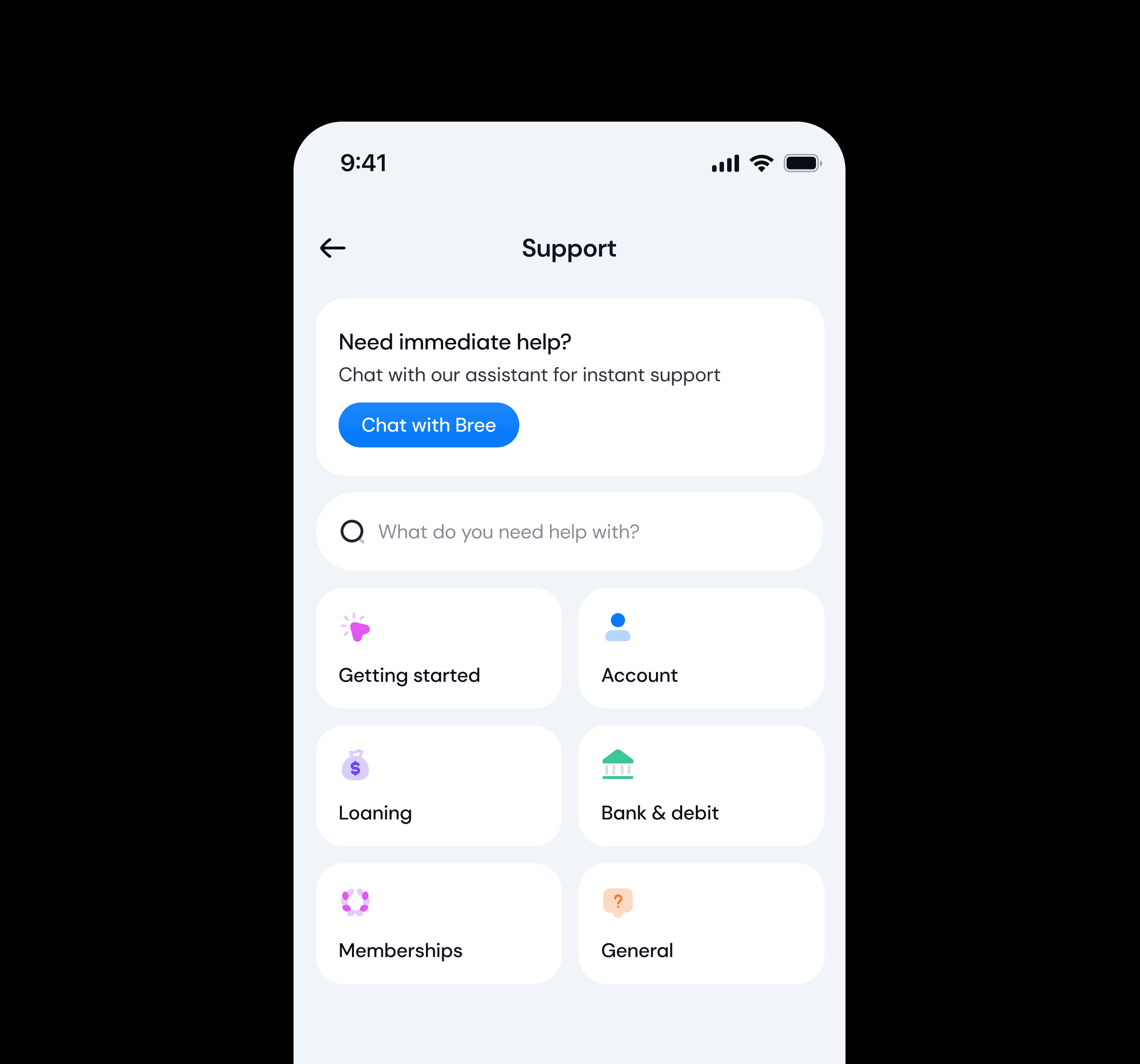
After

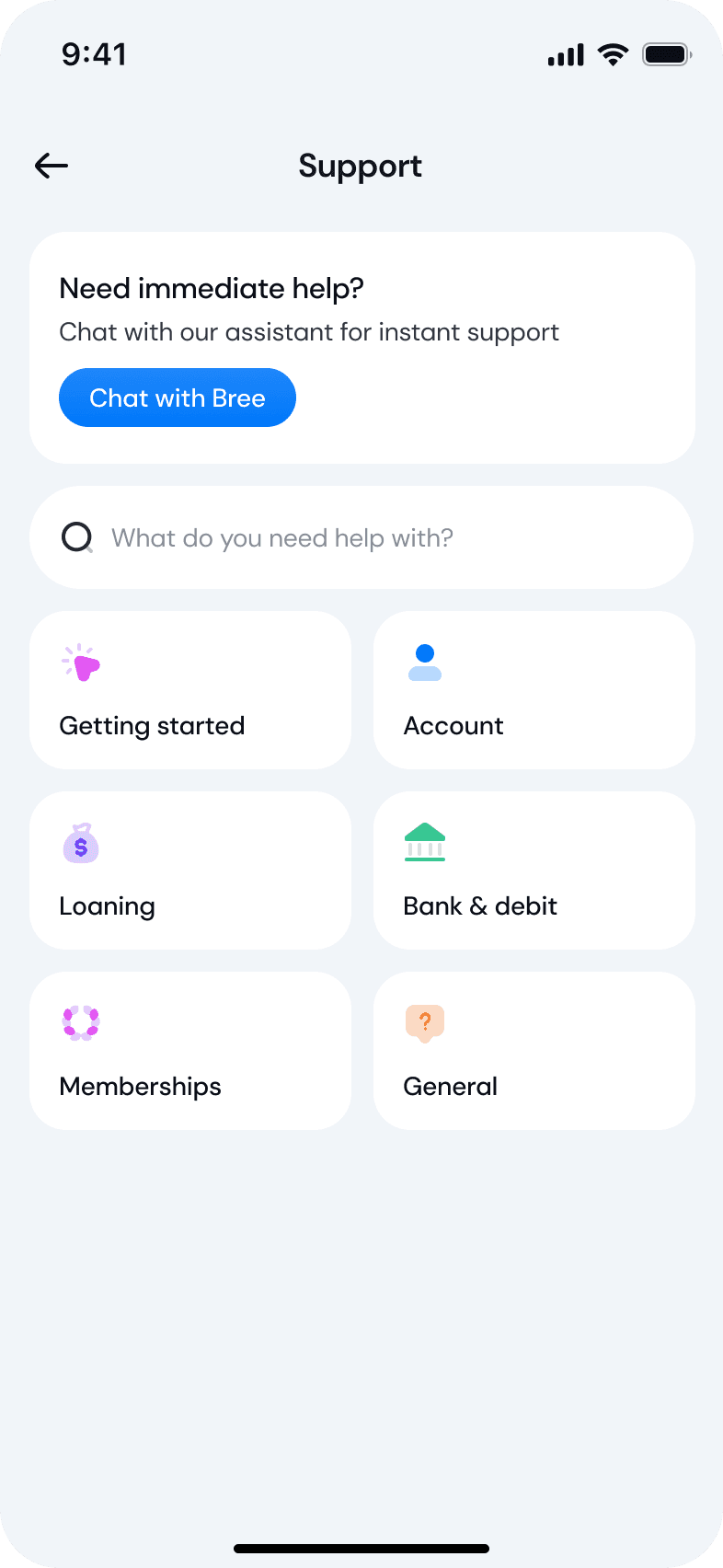
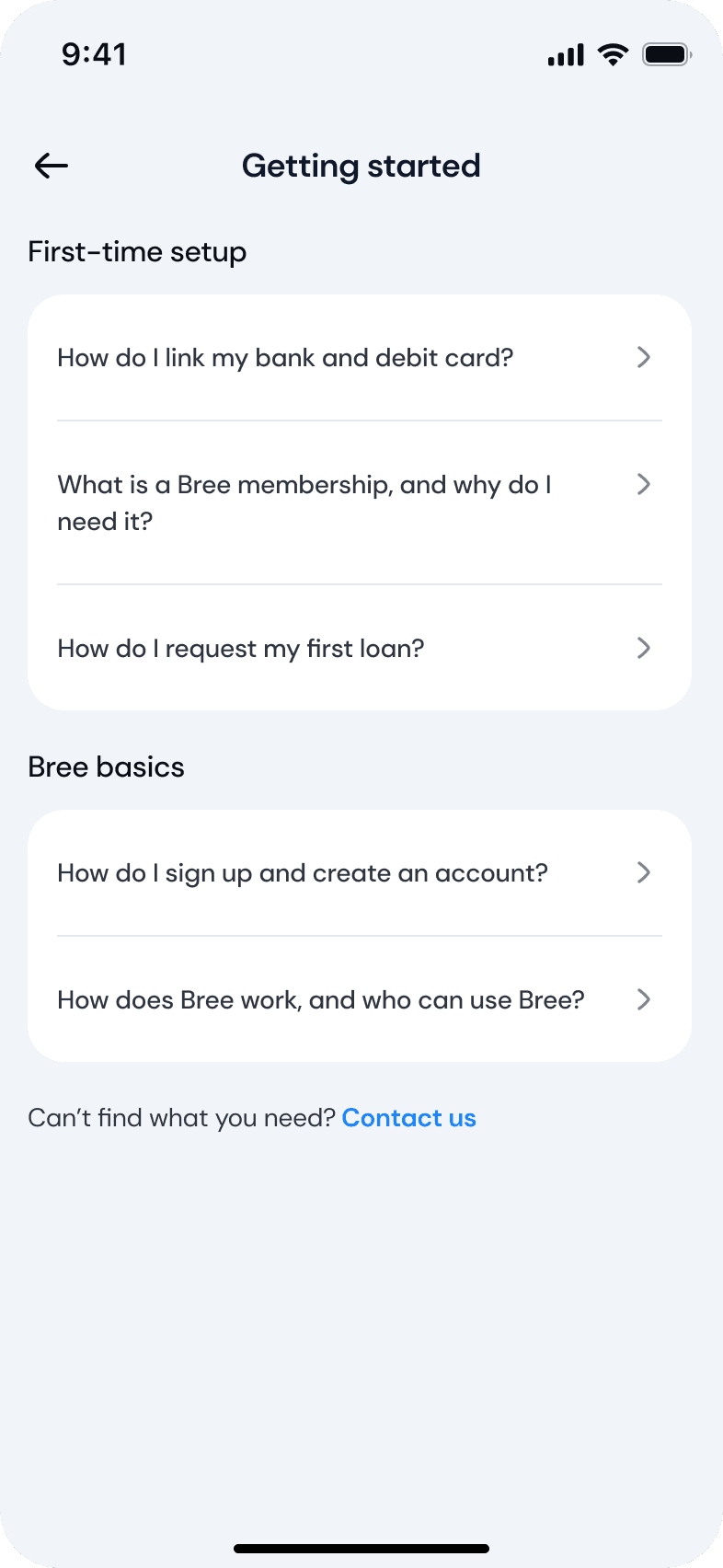
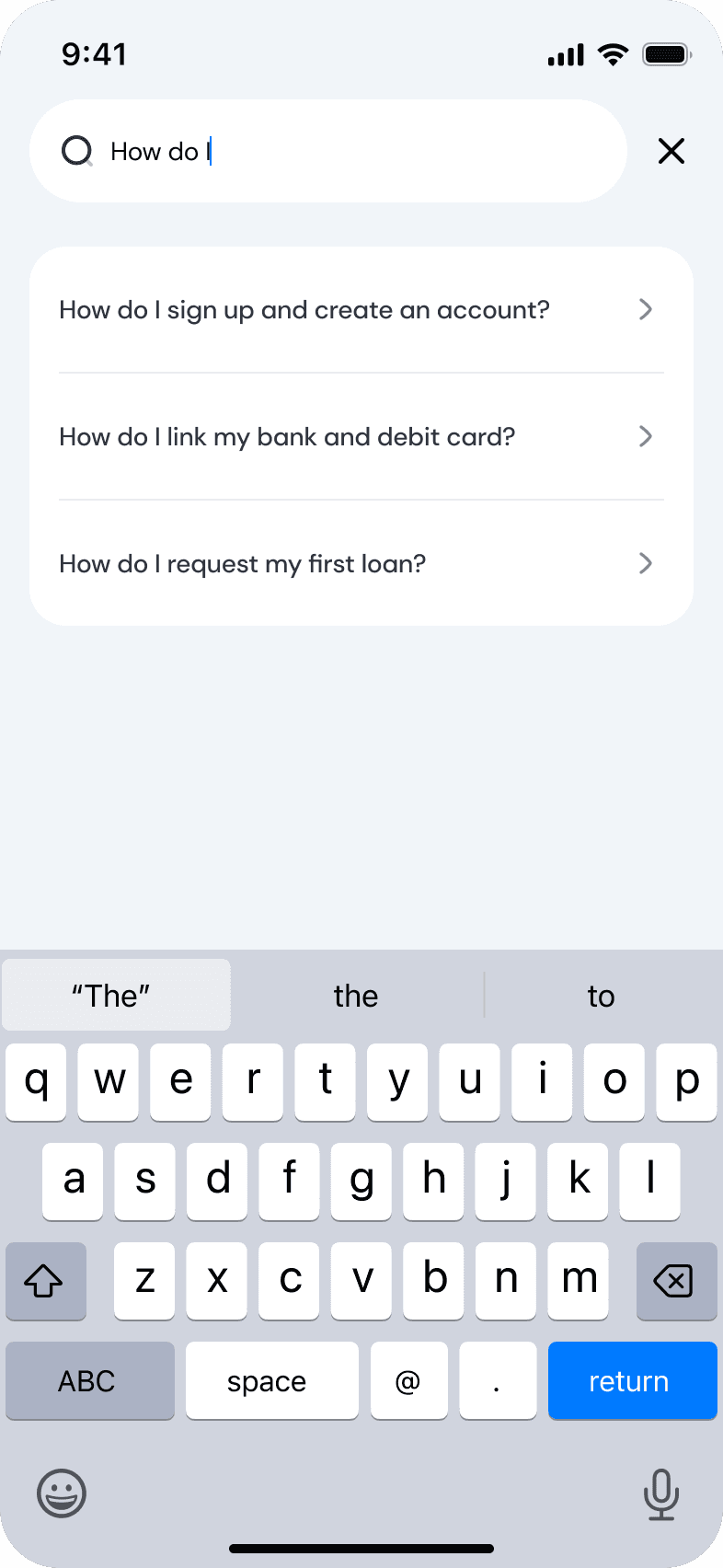
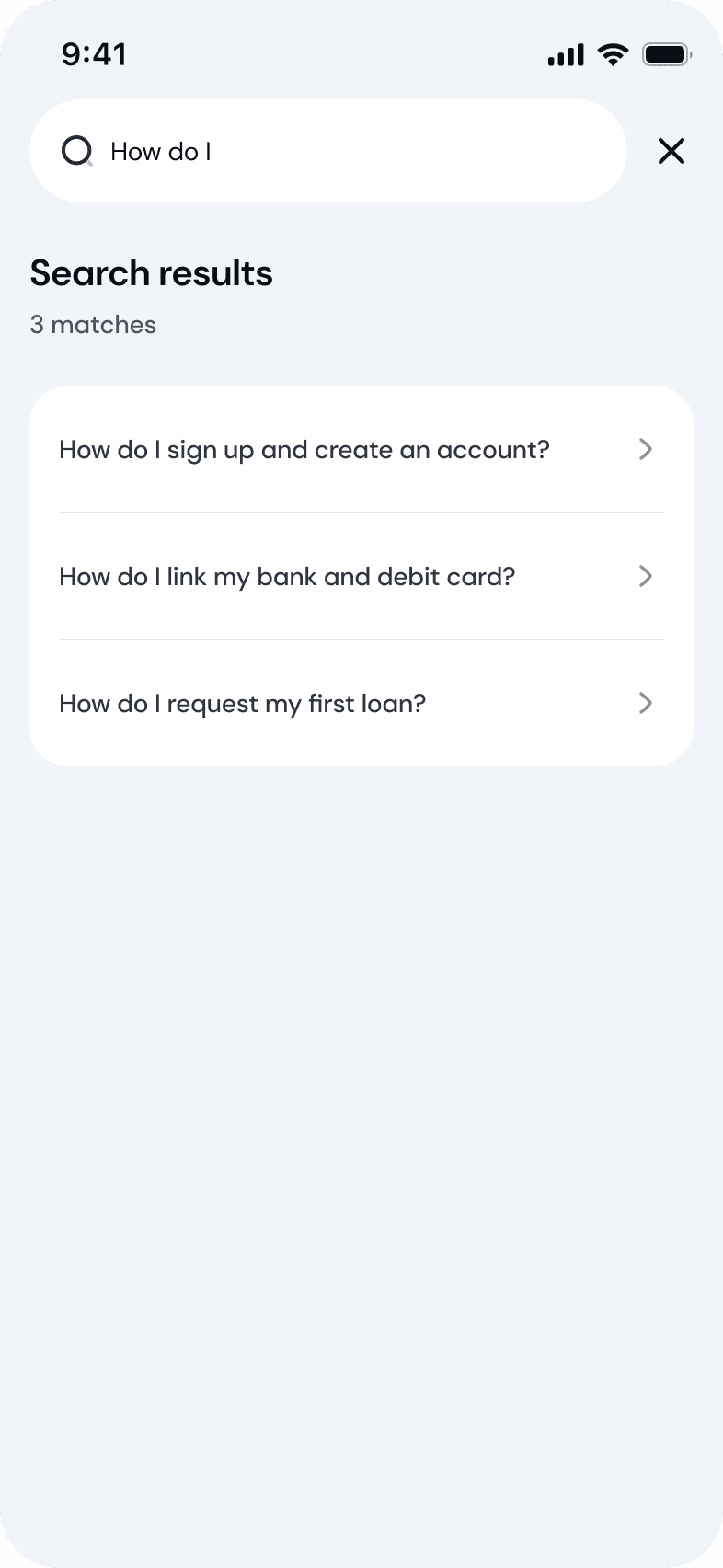
Established clearer information architecture across all surfaces by grouping related content and prioritizing key actions. For example, support content was reorganized into categories and key actions like AI chat were surfaced more prominently to help users find answers faster.

Exploration and iteration

Each core experience went through multiple explorations and iteration cycles. Here's a glimpse into some designs that didn't make it and why.

Exploration and iteration

Each core experience went through multiple explorations and iteration cycles. Here's a glimpse into some designs that didn't make it and why.

Main settings page

I explored multiple directions for the main account surface, ranging from a utilitarian, task-first layout to a more social, profile-driven approach. These explorations tested different balances of efficiency, familiarity, and personalization, helping identify what information should be prioritized and how users should navigate their account. The final direction combines the clarity of a structured layout with subtle personalization, creating an experience that is both functional and approachable.

Impact

These improvements drove measurable gains in usability, self-serve behavior, and support efficiency. Here's a few metrics. Come back soon for more!

300% increase

in AI chat usage, helping reduce reliance on support agents.

48% decrease

in support tickets by improving access to self-serve and AI-driven support.

43% decrease

in login failures by expanding biometric authetication to match users' device and improving login experience.

Impact

These improvements drove measurable gains in usability, self-serve behavior, and support efficiency. Here's a few metrics. Come back soon for more!

300% increase

in AI chat usage, helping reduce reliance on support agents.

48% decrease

in support tickets by improving access to self-serve and AI-driven support.

43% decrease

in login failures by expanding biometric authetication to match users' device and improving login experience.

Membership cancellation

Reducing churn without dark patterns

Bree membership unlocks premium features like spending insights to help users better manage their finances. The existing cancellation flow was a direct path to the exit with no attempt to retain users beyond dark UX patterns.
Problem

Users were cancelling their membership, and there was no attempt to understand why.

Solution

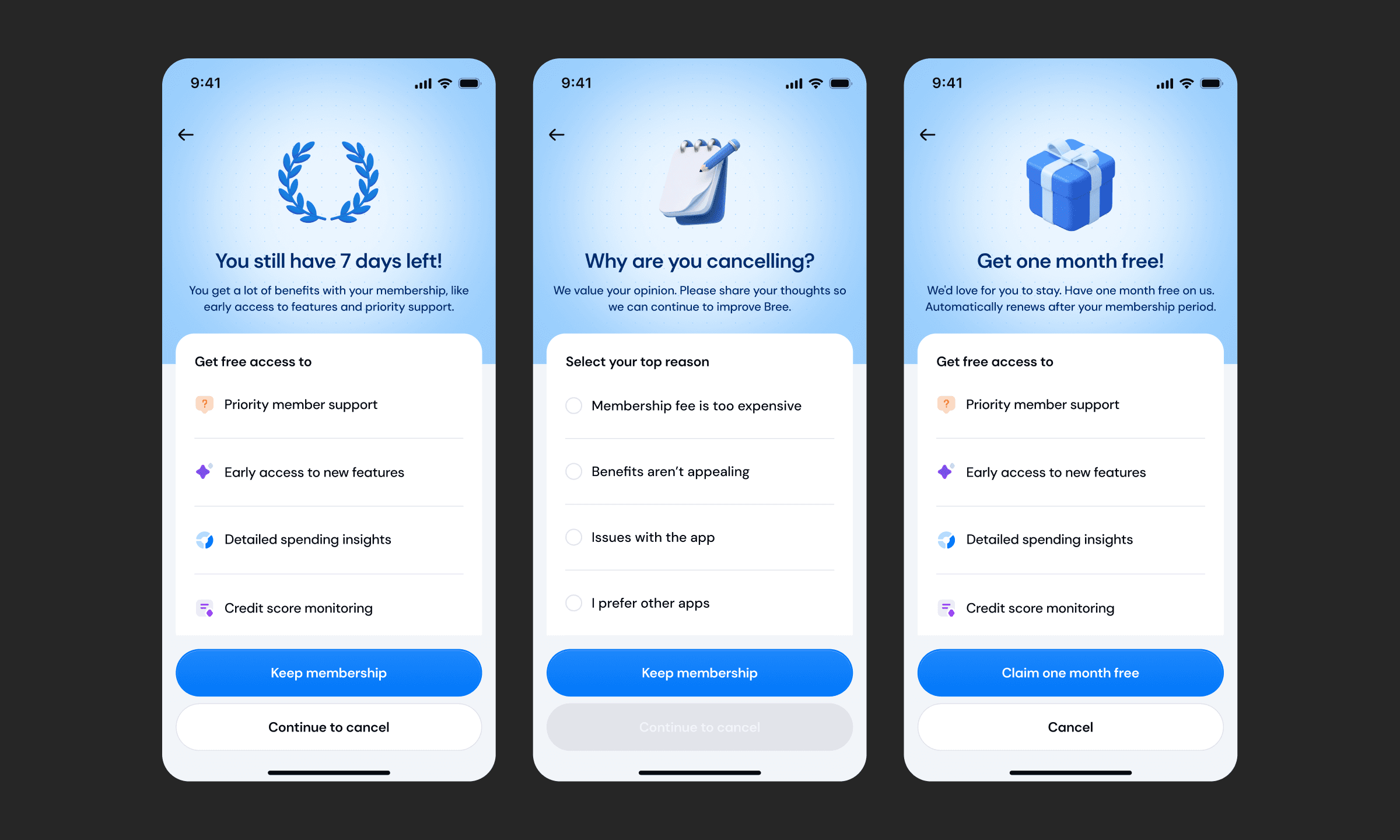
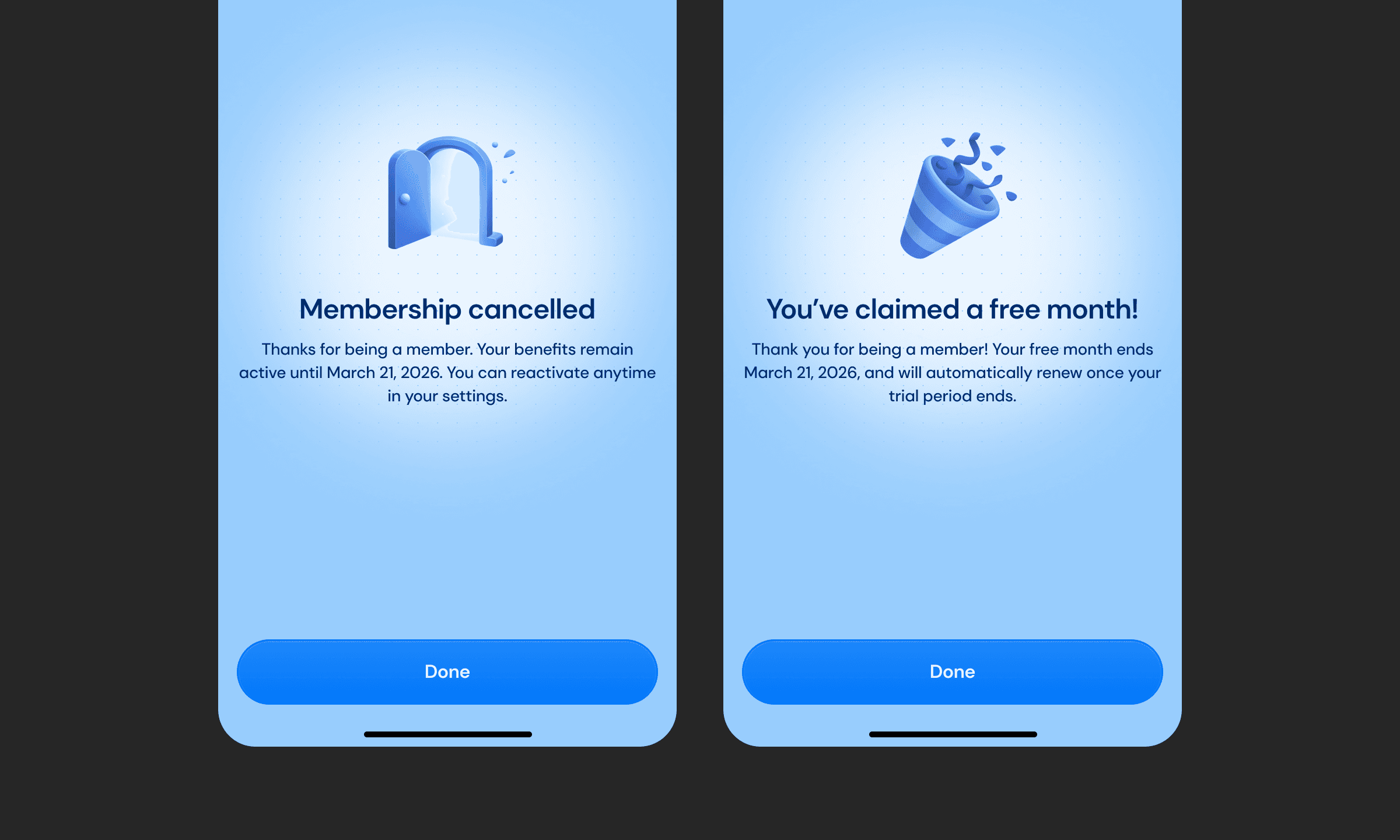
I redesigned the flow to capture cancellation intent and serve targeted retention offers based on the reason. Churn dropped 20% while keeping the experience transparent and easy to complete.

Problem

Users were cancelling their membership, and there was no attempt to understand why.

Solution

I redesigned the flow to capture cancellation intent and serve targeted retention offers based on the reason. Churn dropped 20% while keeping the experience transparent and easy to complete.

The exit

A new cancellation flow that surfaces membership value, captures user intent, and introduces targeted retention moments. Each step is designed to feel clear and respectful, while guiding users through their decision without unnecessary friction.

The exit

A new cancellation flow that surfaces membership value, captures user intent, and introduces targeted retention moments. Each step is designed to feel clear and respectful, while guiding users through their decision without unnecessary friction.

Targeted retention offers

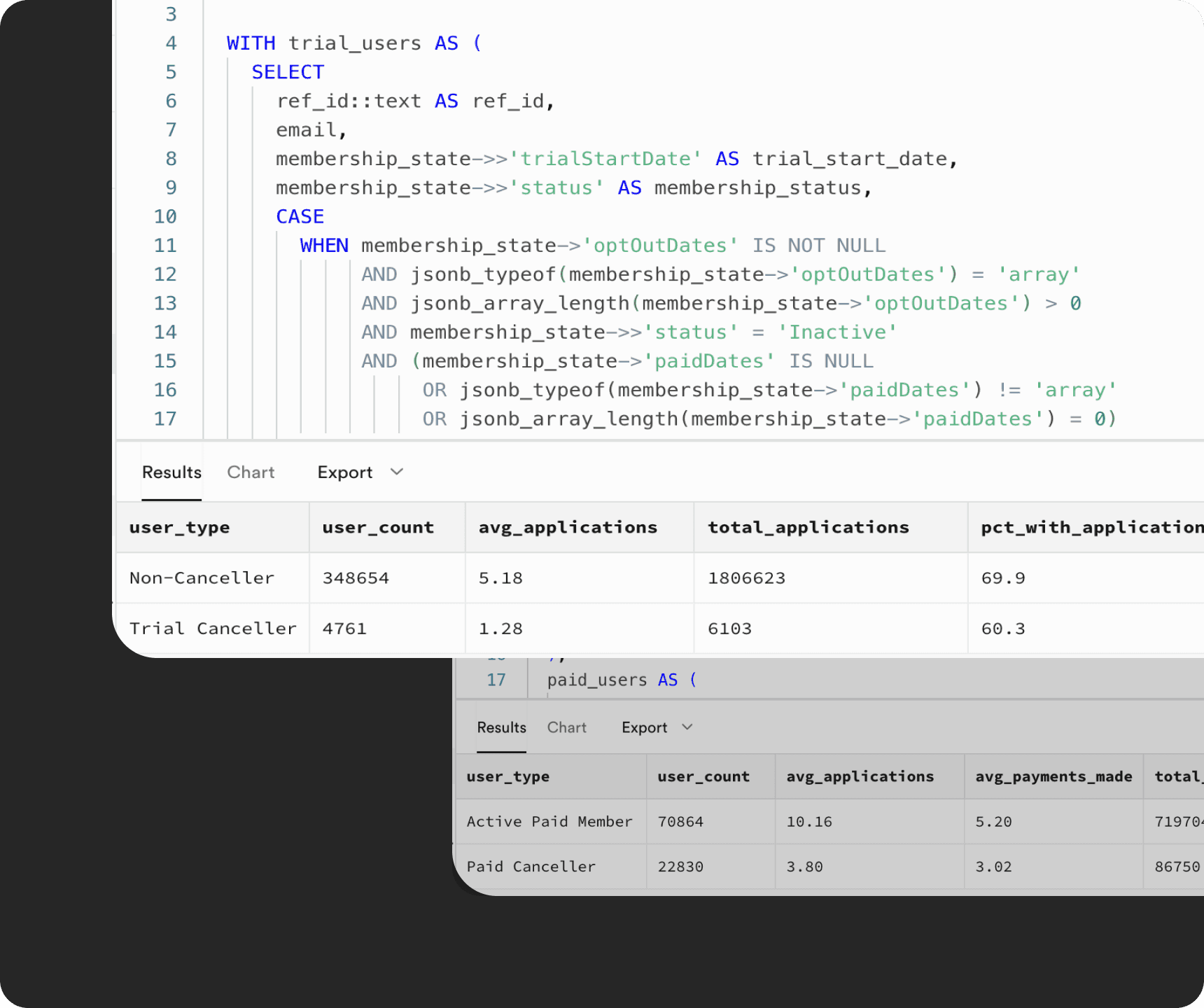
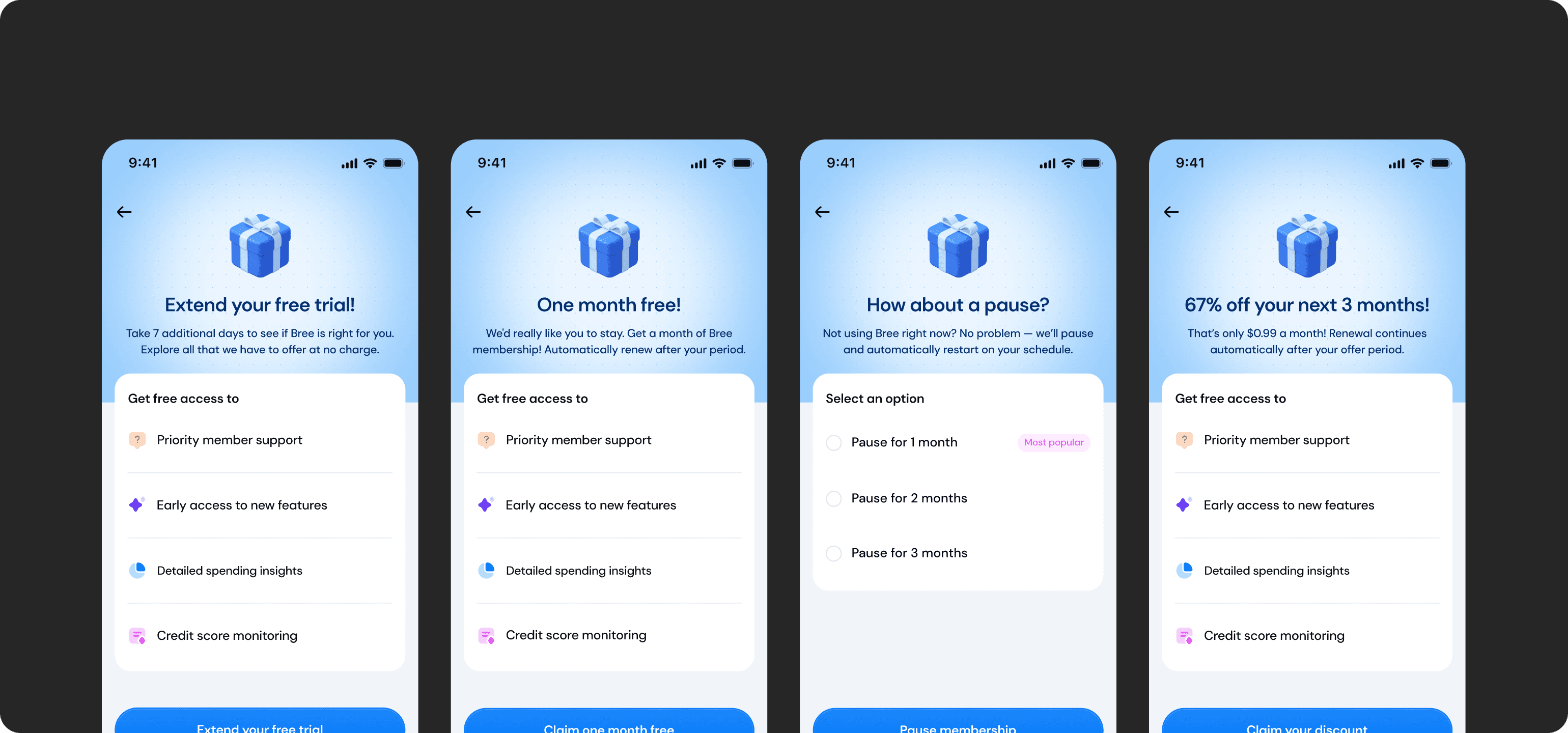
I analyzed cancelling user data and found clear differences in engagement, from trial users who never reached value to paid users who didn’t find it worth the price. Instead of a one-size-fits-all approach, I introduced targeted retention offers based on user state, extending time, reinforcing habit, offering flexibility, or reducing price.

Targeted retention offers

I analyzed cancelling user data and found clear differences in engagement, from trial users who never reached value to paid users who didn’t find it worth the price. Instead of a one-size-fits-all approach, I introduced targeted retention offers based on user state, extending time, reinforcing habit, offering flexibility, or reducing price.

Feedback & status clarity

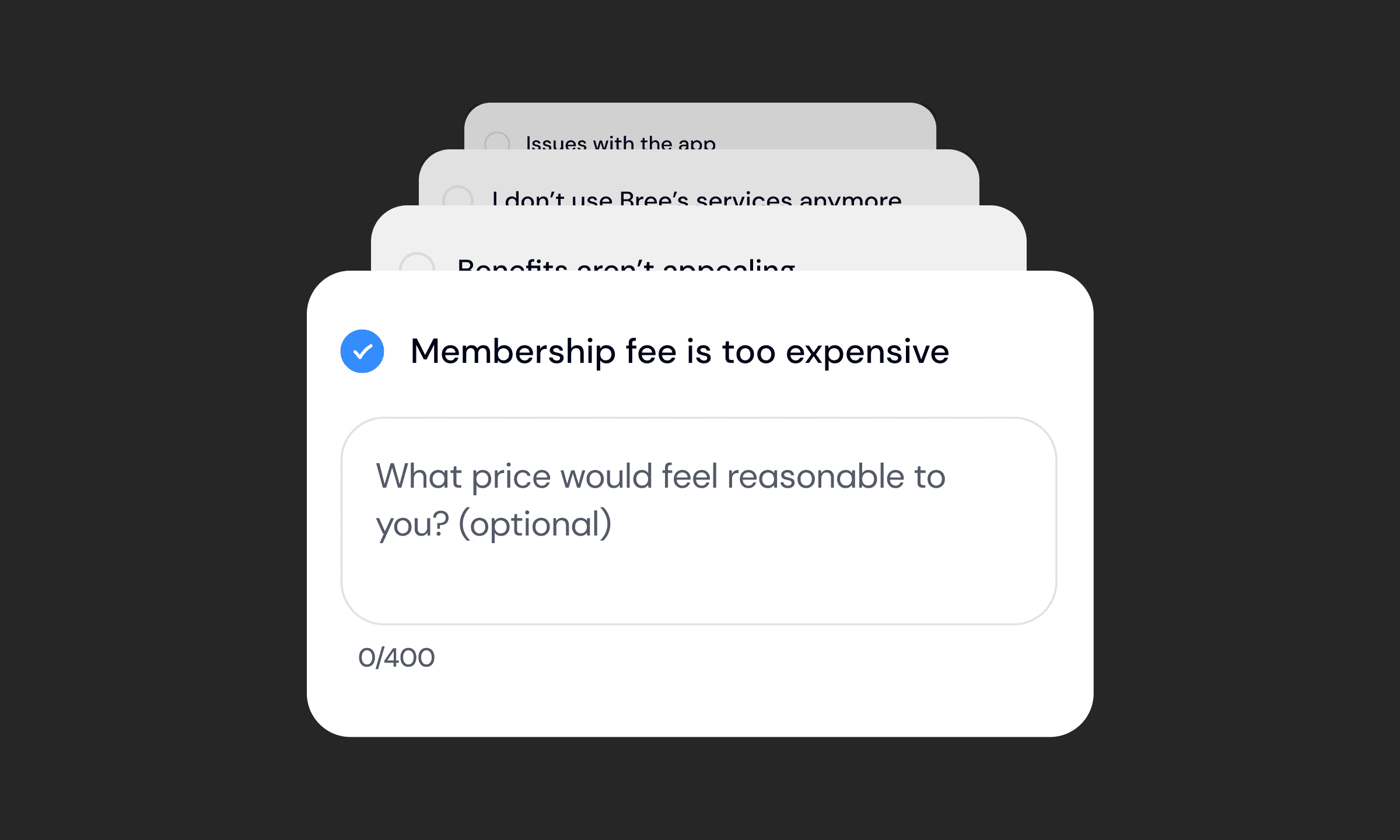
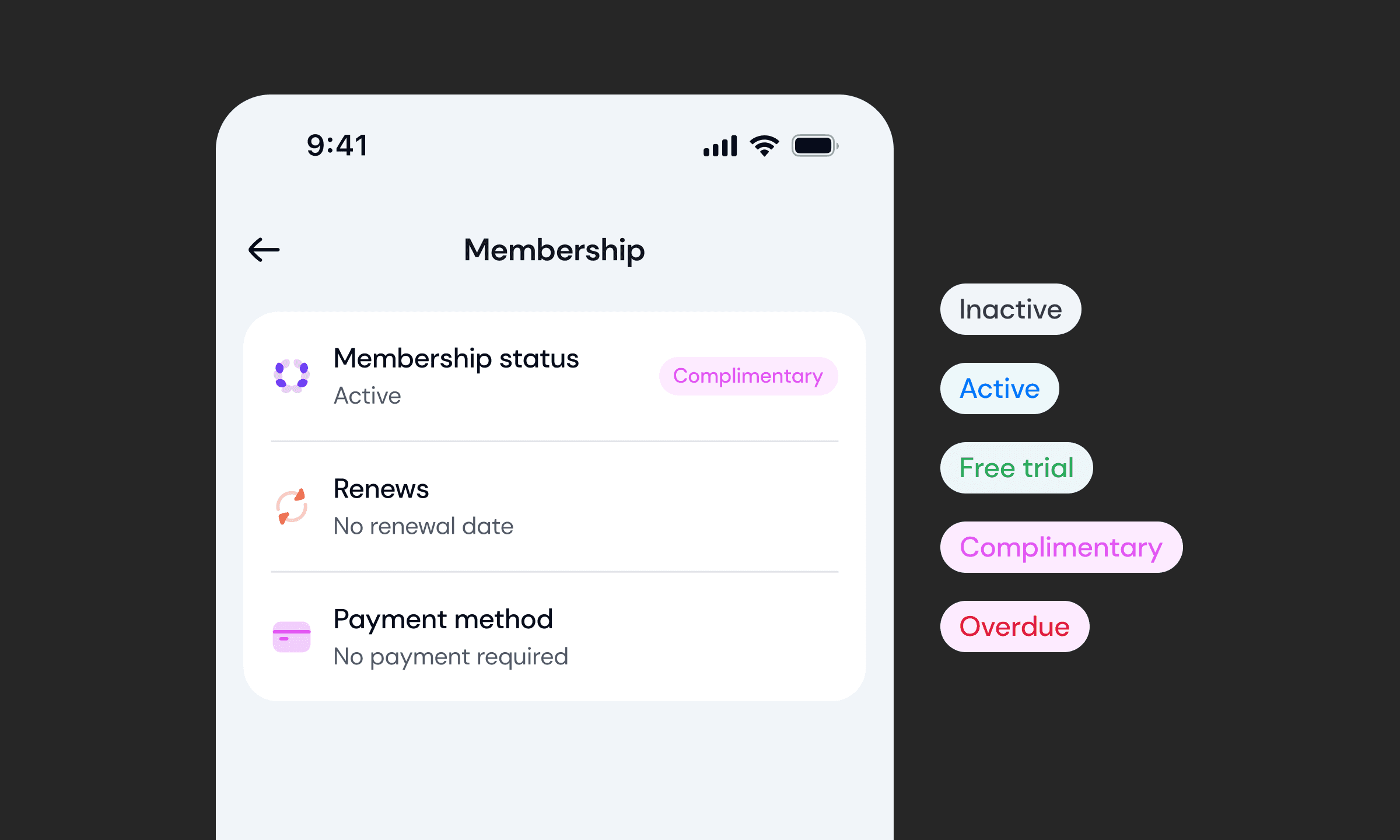
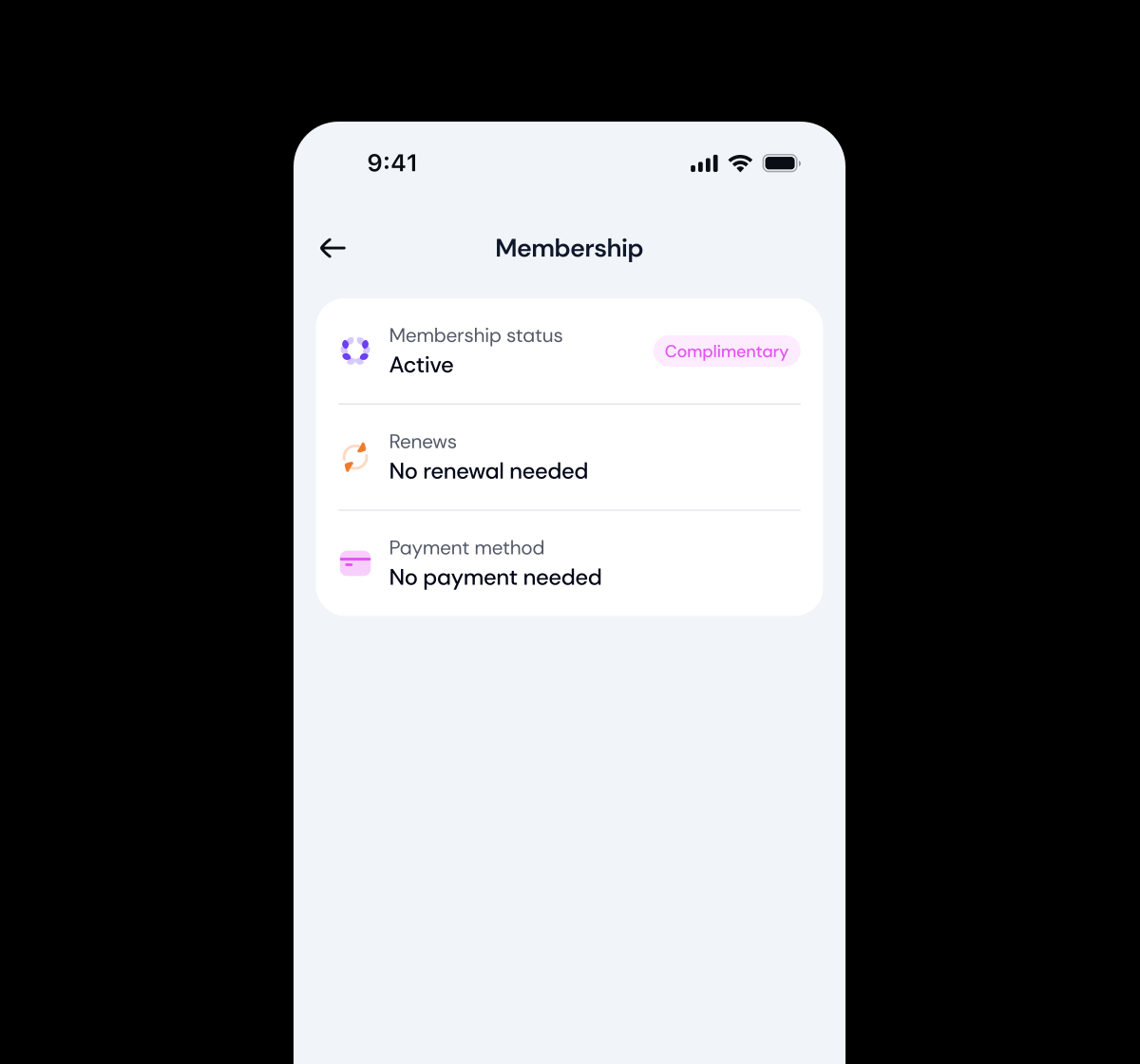
The cancellation survey now captures deeper context by providing more reasons and letting users expand on their reason. I also clarified the existing membership experience by surfacing key details and adding status tags across settings and the membership details screen for at glance viewing.

Feedback & status clarity

The cancellation survey now captures deeper context by providing more reasons and letting users expand on their reason. I also clarified the existing membership experience by surfacing key details and adding status tags across settings and the membership details screen for at glance viewing.

Key insights

By looking at both user behaviour and the existing flow, a few clear patterns emerged that explained why users were leaving and where the experience was falling short.

Dark patterns eroded trust

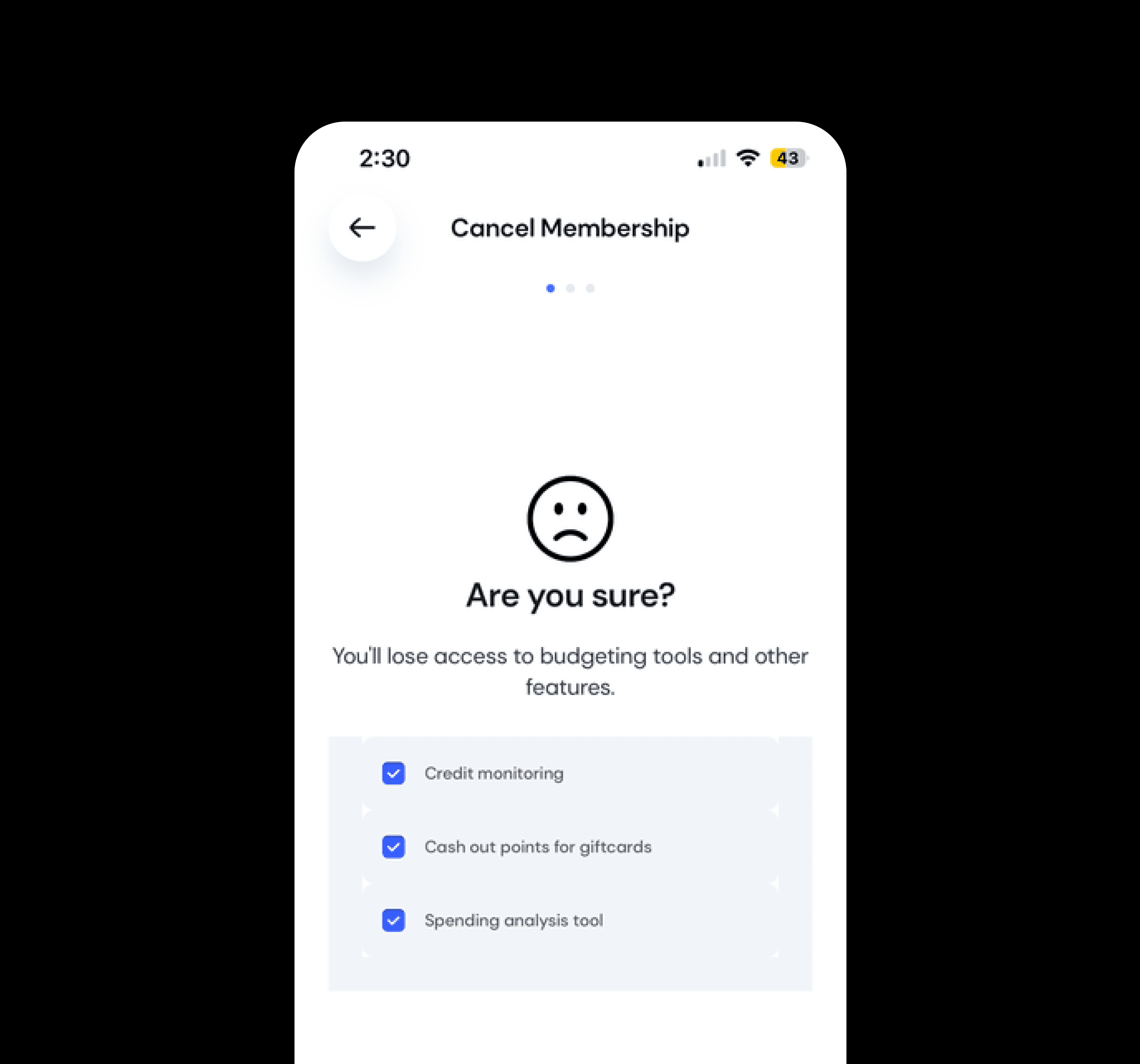
The cancellation flow relied on patterns like swapping CTA positions, creating frustration and confusion. Instead of improving retention, it broke user trust at a critical moment.

Guilt replaced value

Users were forced to acknowledge what they’d lose, but weren’t reminded why the membership was worth keeping. The experience focused on pressure over genuine value.

Feedback was wasted

While we prompted users to share why they were cancelling, this data wasn’t stored or structured. We were collecting insight without actually learning from it.

Lack of membership clarity

Users weren’t given key details like renewal timing or payment method, making it harder to make informed decisions about their membership.

Key insights

By looking at both user behaviour and the existing flow, a few clear patterns emerged that explained why users were leaving and where the experience was falling short.

Dark patterns eroded trust

The cancellation flow relied on patterns like swapping CTA positions, creating frustration and confusion. Instead of improving retention, it broke user trust at a critical moment.

Guilt replaced value

Users were forced to acknowledge what they’d lose, but weren’t reminded why the membership was worth keeping. The experience focused on pressure over genuine value.

Feedback was wasted

While we prompted users to share why they were cancelling, this data wasn’t stored or structured. We were collecting insight without actually learning from it.

Lack of membership clarity

Users weren’t given key details like renewal timing or payment method, making it harder to make informed decisions about their membership.

Exploration and iteration

To land on my final designs, I went through multiple iterations and ideas. Check out some before-and-after's of the old designs vs. new ones.

Exploration and iteration

To land on my final designs, I went through multiple iterations and ideas. Check out some before-and-after's of the old designs vs. new ones.

Before

Membership details were almost nonexistent, showing only an active state and leaving users in the dark about critical information.
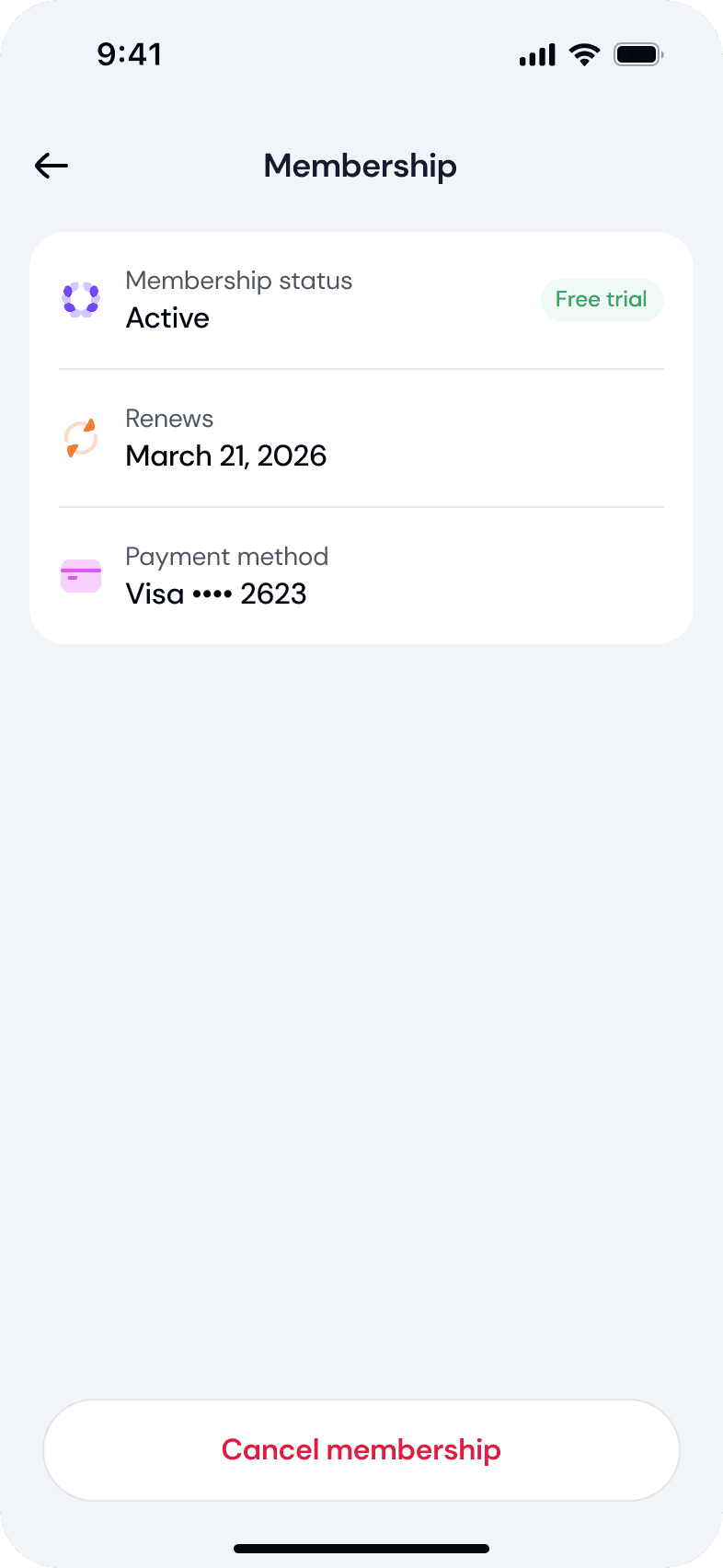
After

Introduced clear, transparent details like renewal timing and payment method, giving users full visibility and confidence in their decisions.
Before

The flow relied on manipulative, guilt-driven tactics, forcing users to acknowledge lost benefits in an attempt to pressure them into staying.
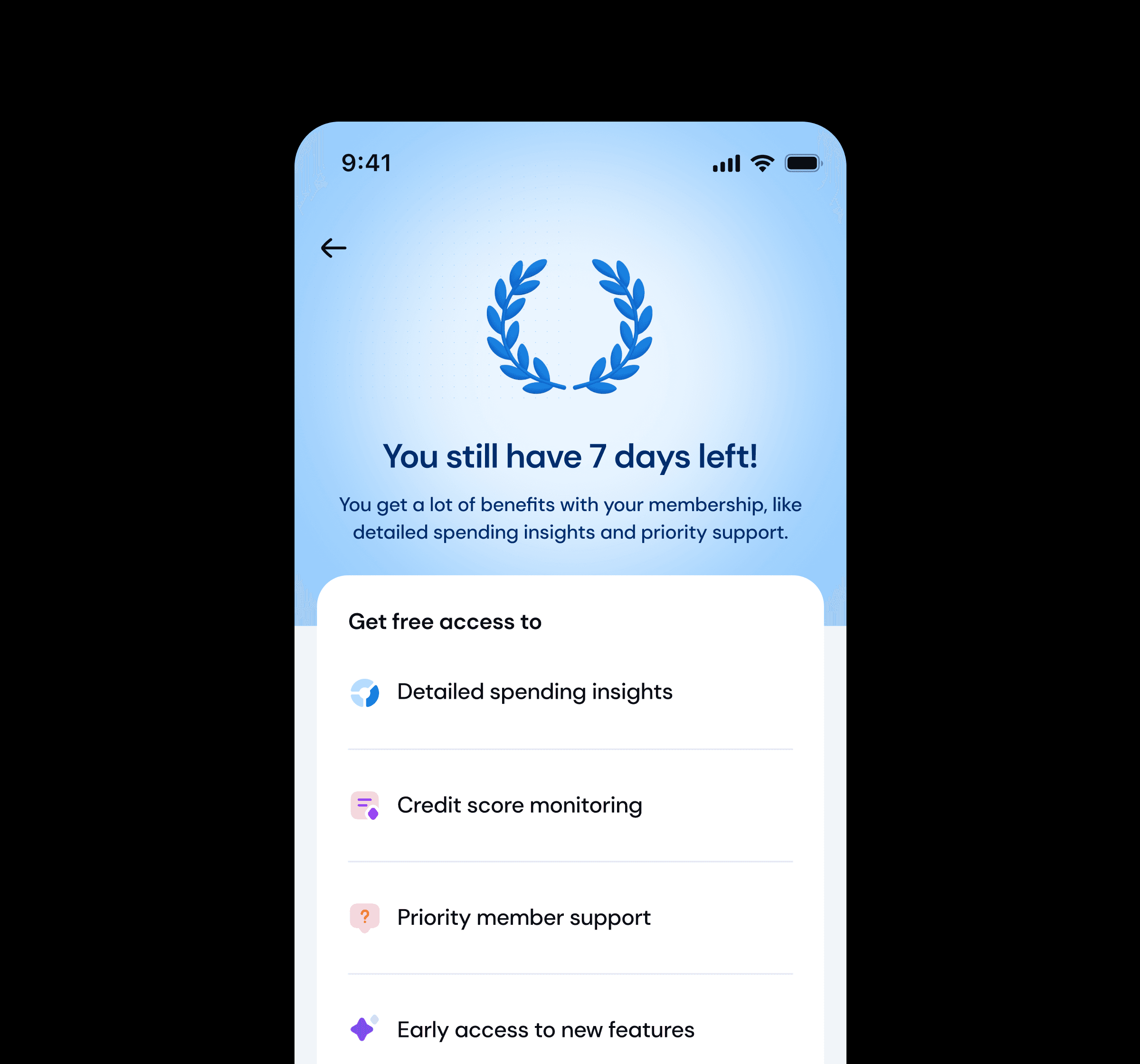
After

Reframed the experience around genuine value, clearly communicating how the membership supports users so they can make an informed, confident choice.
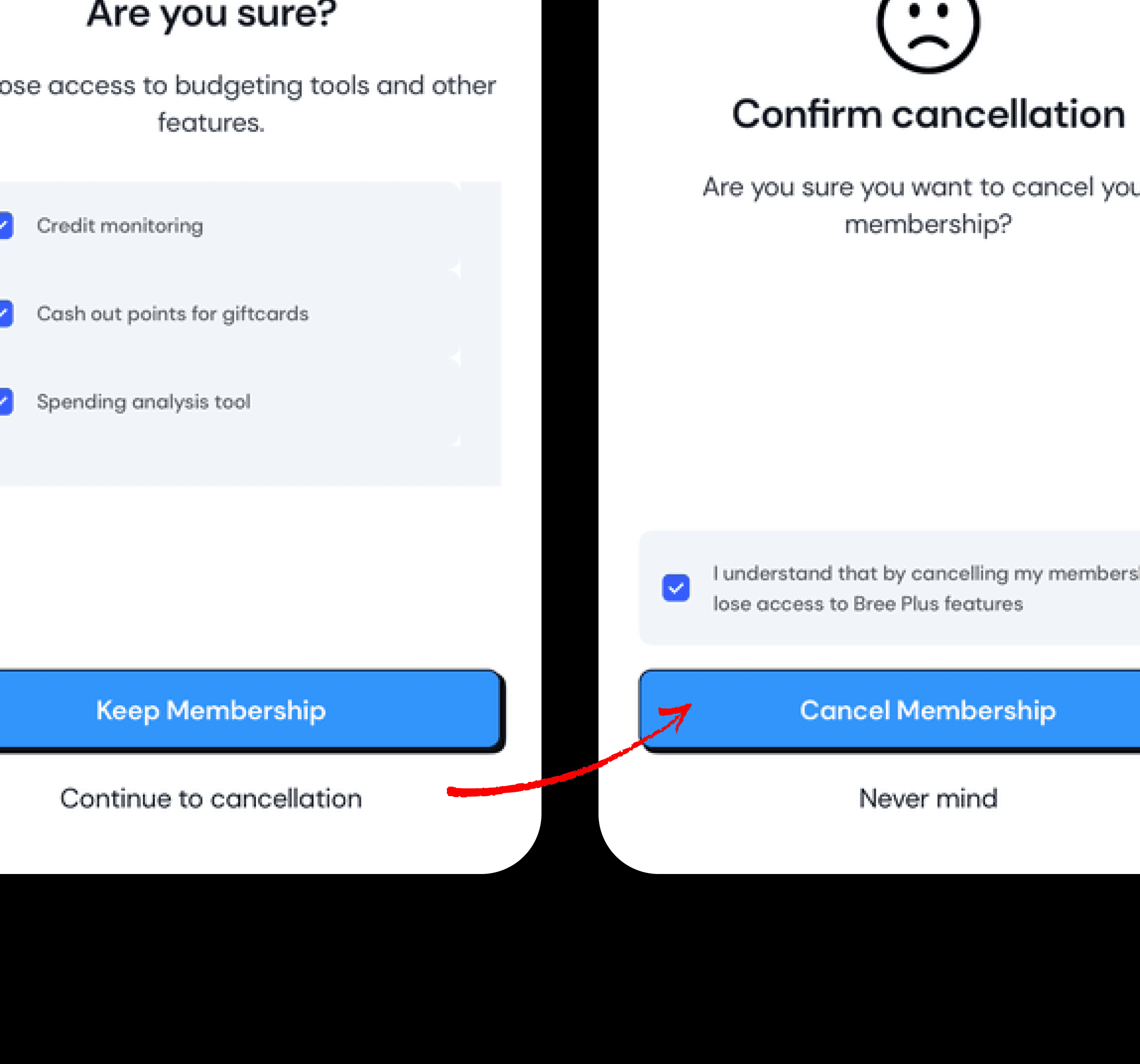
Before

CTAs constantly swapped positions, creating a misleading and frustrating experience that relied on users making mistakes.
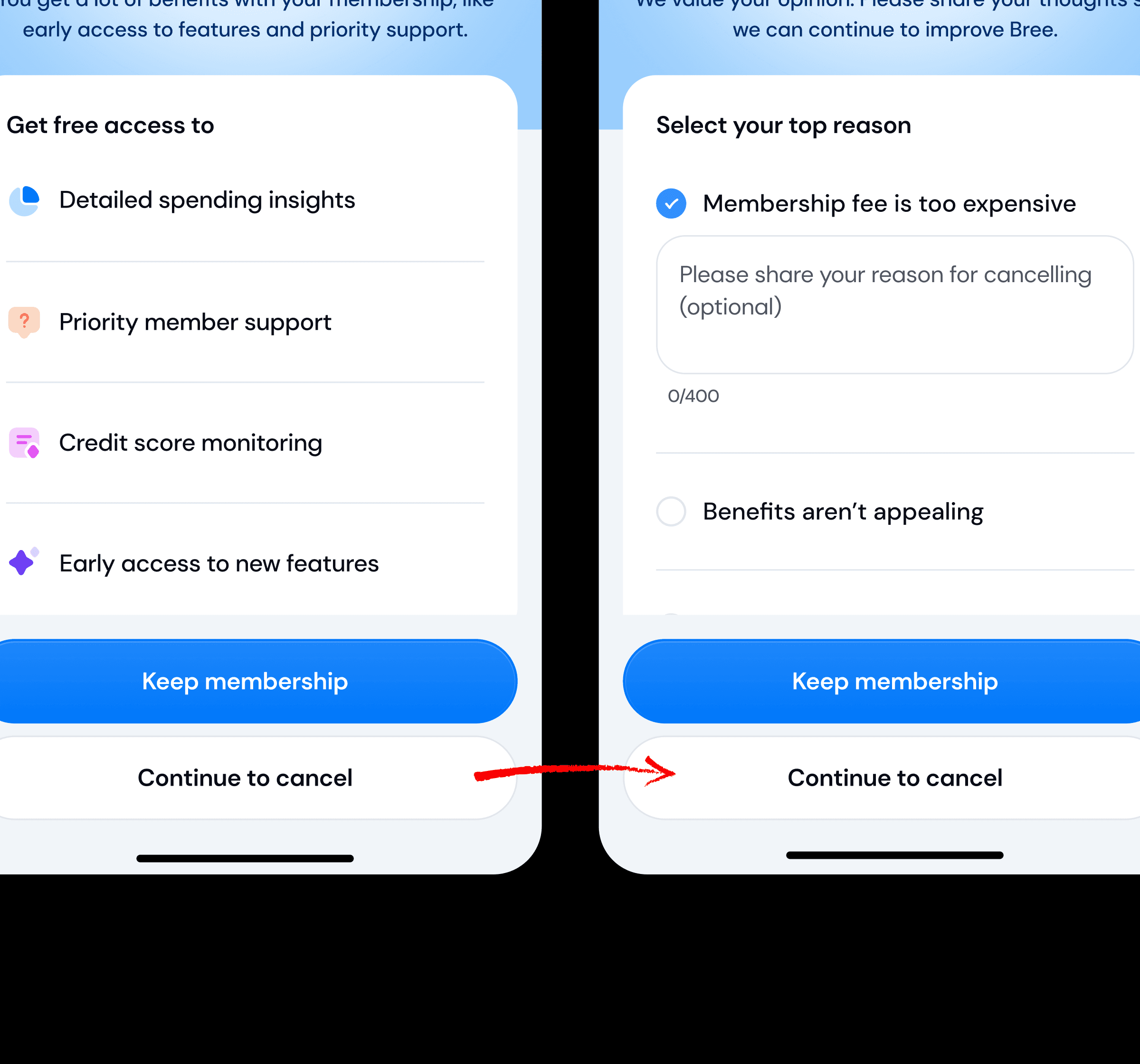
After

Designed a consistent, predictable flow that aligns with user expectations, building trust and reducing unnecessary friction.

Impact

A more transparent and user-centered cancellation experience led to lower churn and higher revenue.

20% decrease

in churn by redesigning the cancellation experience.

22% increase

in membership revenue month-over-month.

Impact

A more transparent and user-centered cancellation experience led to lower churn and higher revenue.

20% decrease

in churn by redesigning the cancellation experience.

22% increase

in membership revenue month-over-month.

Check back soon!

More of the projects I worked on will be added soon! Be sure to drop by again!

Check back soon!

More of the projects I worked on will be added soon! Be sure to drop by again!

Thanks for visiting my portfolio!

Best viewed on desktop.

© 2026 Chris Pan.